Monday, 30 December 2013

A procurement prediction for 2014

I generally don't make either New Year resolutions or predictions but this year I am going to break that habit and make a prediction. My prediction is that the blind belief that public sector PQQs are evil personified will be seen for what it is, a folly.

At some stage during 2014 it will dawn on those lobbying for the death of the PQQ that organisations in the private sector, who have no need to follow the herd of public sector political rhetoric actually use PQQs too and see them of use as both buyers and sellers.

I predict that those business organisations who have lobbied for the removal of PQQs will recognise the transaction costs of single-stage procurements, borne by every bidder, are more costly than the bidding costs of only pricing when the bidding organisation has a high probability of success. Common sense will prevail and we will see PQQs recognised, for what they are, as a useful tool.

Linked with that, I also predict that, rather than DCLG mandating the removal of PQQs, when they consult with councils, they will learn that councils would prefer the right to chose when a PQQ is appropriate.

So, that's my prediction for 2014.

I hope it is successful for you, thanks for reading the blog.

Saturday, 28 December 2013

Is putting on the Ritz compatible with centralised purchasing change management

Some of the greatest challenges which face procurement have been how to put in place collaborative purchasing arrangements, avoid maverick buying and ensuring adherence to  corporate framework agreements. We heard yesterday that the Crown Commercial Services are making use of outside support and one of the areas of help is centralised buying. We're also familiar the preciousness of identity, for example, the difficulties of getting England's 43 police forces to agree on a common specification for white shirts - a problem which the Gershon Review highlighted a decade ago, yet still persists.

Part of the problem is that individuals like to suggest they are in such a position of power and in that position they have the the freedom to exercise choice by opting to step outside what is okay for others - what is good for the goose isn't always perceived as good for the gander. The problem is also actually about change management - you need a compelling justification for the 'corporate deal', you need to have brought key stakeholders with you and won their heads, if not their hearts, and you need clear and consistent leadership by example. If you can get the Chairman and CEO to use the corporate deal, for example, for travel policy, you're well on the way - if you can't get them to adhere, then all sorts of excuses, justifications and exceptions start to materialise.

So given that CCS hope to get greater adherence for their bulk purchasing better buys, today's revelations in the Times that the Chancellor has opted out of lower cost (free) accommodation at 'The Ambassador's' and instead chosen to stay in private hotels (£289.97/night) is either a a threat or an opportunity for their strategy.

Tuesday, 24 December 2013

Case studies in Procurement fraud for Dummies

Who would immediately spot the likeness between a Sony Vice President and an NHS learning & technology manager. Yet, apart from both making the news today, both carried out simple procurement frauds.

The Sony VP submitted false invoices and pocketed the dosh, while the NHS manager was slightly more creative in that he set up his own company and supplied the Trust at inflated prices.

These types of procurement fraud are straight out of the introductory pages of Procurement Fraud for Dummies and could have been easily avoided. Three-way matching is the traditional protection: the person responsible for the Purchase Order, the person confirming delivery and the person authorising the invoice payment need to be different people. An effective eP2P system is another solution - when you're dealing with £1m fraud the business justification easily stacks up, but the system needs to be properly implemented with the right protections.

Slightly more protection is needed to protect against the likes of the NHS fraudster, yet still fairly basic. He was able to invoice for services received from his own company at inflated rates, for example, invoicing £10,750 for a service which cost £1,500. Why on earth did the organisation not require a 'ballpark' estimate of the price compared against the invoice price? Although I am not a great fan of low thresholds for RFPs, it would be interesting to know what the Trust's thresholds were and whether those internal rules were policed. Then again, how was it so easy for an employee to sell to his employer - it may not have stopped the fraud but signing an annual declaration of interests may have helped.

Monday, 23 December 2013

When the Ministers met the CLG procurement inquiry

At last, I hear you say, we've reached the seventh, and final, oral evidence session of the CLG Committee Inquiry into procurement. The witnesses being Baroness Stowell of Beeston (Parliamentary Under-Secretary at DCLG with responsibility for procurement) and Nick Hurd (Minister at the Cabinet Office). When you recall the central government's CPO reports to the Cabinet Office these witnesses should be in a very strong position to speak with authority on the political objectives of procurement.

The Baroness took an early opportunity to volunteer her view of procurement effectiveness:
They should understand that it is not just about buying the relevant services at the best price possible but that this is also an opportunity to make sure that procurement is a way of getting the best service you can and that it is possible to improve the services that are provided locally. If we start putting a [savings] target on things, the focus then is on that rather than what I would see as the more important outcome, which is a better local service for local people.
It is important to note that this was stated in response to a question on what could be potential savings from procurement as opposed to "what would good look like". The Minister responsible for local government procurement, therefore, sees procurement as not about lowest price but better local services. It is really disappointing that the Committee didn't take the opportunity to compare that view with the Cabinet Office Minister's, as you may recall his boss, Francis Maude, told the Public Administration Select Committee in May of this year: that the "primary objective through procurement is getting the goods and services needed by the citizens at the best price". Is it just me, or are the Cabinet Office and DCLG at odds on what epitomises good procurement?

Then compare, former Local Government Minister Michael Heseltine's view, which has the implied endorsement of the Chancellor:

Thursday, 19 December 2013

Can the loss of £100m be a good news story for procurement?

The PwC report into the failed BBC Digital Media Initiative has now been published. We know masses
 of public money was wasted and we know, with the benefit of hindsight, that we'd all have done a better job and pulled the plug earlier. But I think this report is actually a good news story, particularly for complex contracting, if the high profile of the debacle leads to the report being read and learnt from. Learning the lessons could lead to many more doomed projects being aborted earlier and therefore unnecessary costs avoided.

The report suggests that there was an absence of an effective governance structure which enabled challenge of time, cost and quality. This has been a common problem with complex contracts and reminds me of the problems with the Scottish Parliament building when David Steele announced he was kept in the dark by civil servants on progress. It is not enough for those in decision making roles to 'approve' they also need the confidence to ask challenging questions as part of risk management.

There was a failure recognise that the DMI was more than a technology solution and needed effective business change management too. Reporting was based on the technology risks and failed to give due attention to the business change management risks. Again this isn't a first but remains, to me, one of the key reasons IT projects fail - it's a bit like giving someone who has never had a telephone a brand new iPhone and assuming they will immediately understand why and how to use it. The power in technology, to me, isn't in the machine but the capacity and willingness of stakeholders to harness its potential.

Wednesday, 18 December 2013

Celebrity advice, BMJ and lessons for procurement scrutiny

The latest issue of the British Medical Journal includes an interesting paper on the why the public follow celebrities' medical advice. To me, this paper is particularly relevant to the current CLG Committee Inquiry into local government procurement but is also relevant to procurement decision making, in general, when perceived 'experts' (celebrities) provide advice.

The BMJ paper discusses the positive influence which celebrities can have in highlighting health issues, but cautions against celebrity 'quacks' whose advice is listened to, even when it is dangerous, if adhered to. The question is 'Why do celebrities utterances and endorsements carry so much weight even though they lack any evidence, qualifications and specific experience?' The paper draws on economics, marketing, and psychology literature to provide an answer.

One of the reasons is that the public are bombarded with competing information and in order to make sense of that information:
people naturally look for signals that indicate one source as being more credible and effective than another. Owing to the vaulted status of celebrities in society, their endorsements act as signals of superiority that distinguish the endorsed item from competitors, encouraging people to change their health behaviors accordingly. 
[Celebrity] credibility may stem from the halo effect of celebrities' success, which biases people's judgments of celebrities' other traits and gives them a cloak of generalised trustworthiness that extends well beyond their industry or expertise. Celebrities are in turn perceived to have greater credibility than their non-celebrity counterparts, such as doctors, despite having less medical knowledge and experience.  
I don't see the problem of celebrity advice being isolated to the medical world. I also feel that 'celebrity status' can be more widely defined - isn't it something about putting someone on a pedestal. I have frequently observed the advice of procurement specialists being swallowed up in the aura of 'celebrity' status.

Tuesday, 17 December 2013

Evaluation drama for 'the Queen'

Back in August I discussed the Foster's Comedy Awards and their approach to evaluation. Now I turn to the drama of the theatre, rewriting the script and a novel approach to declaring best Actress Award at the Evening Standard Awards. Pantomime may just be seasonal.

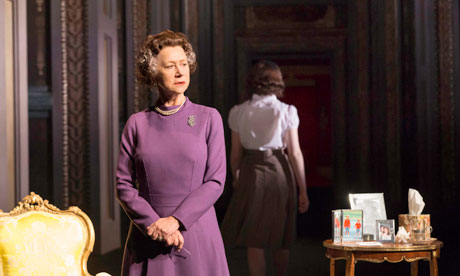
In this real-life drama we learn of a secret ballot between five judges which ended in a dead heat. In a very bizarre piece of casting, the two actresses, who could have been equal winners, found themselves relegated to joint second position as they were overtaken by a new winner, Helen Mirren for her role as the Queen in 'The Audience'.

While a secret ballot took place to determine Best Actress, the results were seen by two of judges, who were employed by the sponsor (The Evening Standard). The two judges saw the results of the ballot, then altered their votes and the completely new winner emerged.

One of those who changed their vote did so by eliminating one of the contenders for the starring role by creating a new category, Best Musical Performance. Whether or not that particular actress was given the choice or asked their preference between the existing and the new award, we don't know.

There was no attempt made to reach an agreement with the other judges, but three of the judges have now resigned. Wouldn't it have been interesting if the culprits had watched Twelve Angry Men and learnt from that instead.

For the winner some of the shine has been removed from what could have been a well-earned accolade. For those shortlisted who lost there will remain the doubt of whether or not they should in a just award been the shared winner. For the judges there will remain the lingering doubt that they were just pawns. Who can have pride in such a piece of shoddy workmanship. Who would want to be associated with such a pantomime.

Next year there won't be judges, just an advisory panel. I'd expect the new advisory panel to ask for some terms of reference before participating to satisfy themselves they've more than walk-on parts in a granted play.

Could you just imagine the outcry if, in a tender award, you couldn't work out which of two bidders is the winner and arrived at solution by deciding 'let's give the award to someone both beat and create an additional award to take the bad look of it' - I'm sure that would never, ever happen.