Showing posts with label design. Show all posts

Monday, 28 January 2013

Grasping the national opportunity for Procurement

Last week saw the publication of the Policy Exchange's 'Eight Great Technologies', authored by David Willets (Minister for Universities and Science). He sets out eight areas where the UK could become a world leader - eight areas for growth - eight areas which form the nucleus of a UK Industrial Strategy, namely:
  • the big data revolution and energy-efficient computing;
  • satellites and commercial applications of space;
  • robotics and autonomous systems;
  • life sciences, genomics and synthetic biology;
  • regenerative medicine;
  • agri-science;
  • advanced materials and nano-technology; and
  • energy and its storage.
Will this gain sufficient cross-party political ownership to provide resilience through the next electoral cycle?

Regardless, this provides an opportunity for procurement to make a significant contribution to the UKs economic recovery and Industrial Strategy. The section we're interested in is the Conclusion - for us, not the conclusion but a manifesto/prospectus.

Friday, 30 November 2012

Opportunity Knocks but can the NHS shine in buying music lessons?

Personal Budgets have been around in local government for some time.  They are now to be rolled out so that anyone within the NHS Continuing Care programme will be able to request their own Personal Health Budget. What does this mean and are there implications for procurement?

In theory Personal Budgets are the lowest form of devolved decision making you can arrive at and they maximise user choice. The person in need of care, rather than being told 'these are the services you will receive' is given a budget to purchase what they think is most helpful to their personal situation. This could include buying a dog for company, paying for music lessons, or, ... . Theoretically there is no reason we couldn't have the next Choir of the Year made up of recipients singing a song on their experiences of Work Capability Assessments!

£2.7bn a year will be spent on the programme - but could it be spent more effectively and will procurement expertise be drawn upon?

I would like to see commissioning, social services staff and those closest to the future recipient to help design the potential shopping list of services which may be required. I would then like framework agreements put in place which the recipients could access. If the 'price is right' and the quality matches the users need, then the recipient could 'call off' the framework.

Of course for recipients ease of access and visibility of the catalogue would need to match their experience of online shopping - could the NHS beat the best in the use of social media functionality for Personal Budget purchasing?

You may ask:

Friday, 23 November 2012

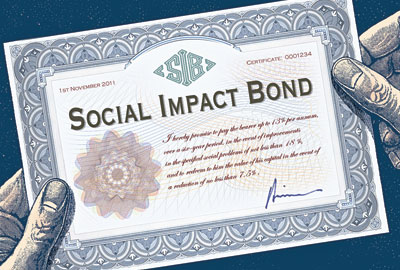
On Social Impact Bonds

Social Impact Bonds are quite an innovative 'payment by results' approach which includes up front investment - you can find good explanations of SIB on the Social Finance and  Young Foundation websites

However, you could paraphrase SIBs as: 'PFI meets Big Society'. Similarities being the drawing in of investment to drive an outcome-based delivery which, had the public sector not been starved of cash, would normally have been public sector funded and managed. They should encourage innovation and be user focused in design (something which we have discussed over the last few days).  Of course investors expect a return, which they are due if the designed intervention works. That return can be a long way away.  Some big issues must be that:

Thursday, 22 November 2012

Designing to fail

TheoryTo design better public services, listen to service users, hear their pain and happiness, and let them shape the service. Pilot, or better still prototype and test. Learn from the pilot. Refine. Make sure you have allocated sufficient funds. Risk assess and manage risks. Train users and and deliverers.

Practice: Announce shift to Universal Credit benefits system from October 2013. Plan to pilot in April 2013 (i.e in Spring and Summer). HM Treasury state in 2012 no more money will be available to introduce new system - NB before the pilot. Base delivery design on an unrepresentative sample, namely "reflect the experience of working people". Acknowledge that those delivering the service do not have the manpower or skills to teach users how to use the internet, even though the deliver channel is internet.

Dependencies: Appropriate IT system.  User/IT interfaces fit for purpose. Potential outsourced delivery partner with capacity and capability to handle big bang roll out.

Risk: High risk of voter dissatisfaction. High risk of displacement of problem from one budget to another. High risk of service users not being able to access service on run up Christmas 2013.  High risk of users not having access to services in as winter weather approaches

Time of impact: Just as users, friends and relatives start to think of who they would want to govern them for the following five years.

Outcome: Potential design to fail case study aimed at providing useful lessons for the future training on:
"We were trying to get them to think about products from a supply chain and user-experience point of view rather than in terms of policy roll out."

Tuesday, 20 November 2012

Designing better services

I sometimes think what's lacking in government policy making is a really good institutional memory and a broader outlook. The real benefit wouldn't be in recycling old policies but in 'ah we tried that before and if we want it to work this time we would need to ..."

The reason I say this is that I have now learnt that senior civil servants recently received training from the Royal College of Art in the hope that they would be more creative and think about how public services could be better user focussed in design. One of the speakers has been quoted as saying:
"We were trying to get them to think about products from a supply chain and user-experience point of view rather than in terms of policy roll out."
A good starting point could have been considering the success of the Nesta Creative Councils initiative or indeed what happened with Innovation Nation. So, learning from those successes and failures would point to: 'ah, therefore, this time we would need to ...'.  Isn't that what you would expect from good policy advisers?

Although I may be doing them an injustice, I suspect that the attendees are not personally known for creativity and design in either their public or domestic lives. I also suspect that they have a civil service centric approach to design - by that I mean 'we can best interpret what the user needs and wants in service delivery'. So while they may have left the training with new colouring books what they probably needed most was a blank notebook and the removal of their pens - were that to have happened they would be dependent on others stating the problem and writing the solutions.  Hold on, haven't we been here before, isn't this specifying by outcomes!

If we want to be creative in service delivery, we need to