Showing posts with label olympics. Show all posts

Thursday, 25 May 2017

An Olympian challenge for sustainable procurement and user satisfaction

In a drawer beside me I have a suite of NIAAF medals, yes, surprisingly, some years ago I was an international athlete!  The medals have personal memories attached to them; I can remember something of each one of those races even now, over 20 years later.  The medals are also something of a tangible legacy which I have always viewed as worth passing to my children and grandchildren.  When I received them, even though I wouldn't be able to retain my fitness, I never gave a second thought as to whether or not the medals wouldn't be durable.

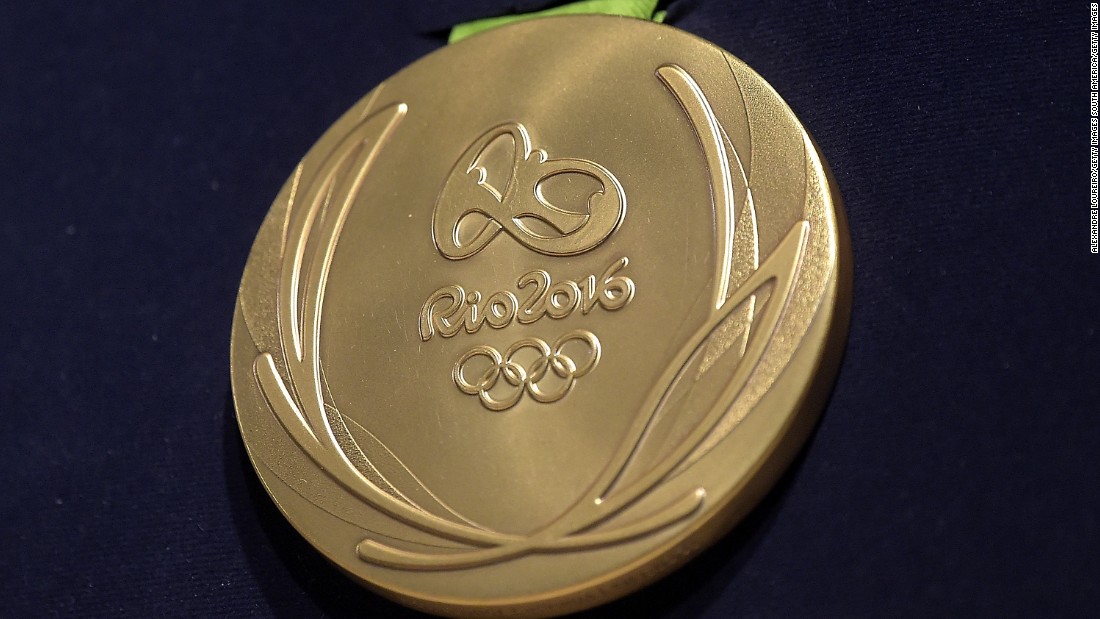
I never had any illusion of being able to win an Olympic medal but I'm sure those who have done assumed their medals would last the distance.  Now we learn that somewhere in the region of 7% of the Medals awarded at the Rio Olympics are starting to wane. It is somewhat ironic that the medals were celebrated for their sustainability - materials used included recycled silver and industrial waste.

Olympic medals are unlikely to have been included in the high cost/high risk profile but that doesn't mean they shouldn't have been subject to a risk assessment and evaluated on the basis of fitness for purpose. That fitness for purpose should have included something of the users perspective too.  It can only be assumed that evaluation didn't take place or, if it did, wasn't given a great weight. The Rio Olympics procurement has once again become a talking point for all the wrong reasons.  Wouldn't it have been easier to have got it right and managed the reputational risk!

But the damage through this lackluster procurement also casts a shadow over the approach to sustainable procurement - instead of acting as a role model it now will serve as an impediment. Sustainable procurement doesn't need to compromise fitness for purpose and shouldn't.

Perhaps the lessons from this are:

  • Consider the specifications others have used, perhaps through consulting with peers; 
  • Place performance and functionality in the perspective of the user;
  • Consider the risks to functionality in the specification and award criteria;
  • Remember the potential for reputational damage in your risk assessment;
  • Test functionality perhaps in the lab;
  • Don't compromise performance and functionality for the glister of sustainable procurement PR.

Saturday, 22 June 2013

Procurement gamesmanship for non-public bodies

Thankfully the G8 has helped remind us that Belfast is experiencing a peace which many would have thought unattainable. But all is not well on the procurement pitch. A challenge has now been lodged by a bidding partnership who feel left out of the opportunity to bid for the Gaelic Athletic Association's £70m stadium renovation. As yet the basis of the challenge is unclear but it can be assumed it is based on the fact that while the GAA are not a public body, a significant percentage of the funding is coming from the NI Executive which is a public body.

We will watch closely how this develops but it is important to remember that non-public sector CPOs can be caught by public procurement directives if they are spending money provided by the public sector.

Questions which will be worth hearing the answers to include:

  1. The basis of the challenge?
  2. What will be the basis of the GAA defence?
  3. What were the credentials of those who advised the GAA on the procurement approach?
  4. Did the challengers object to the GAA regarding the procurement process? If they did, when did they object and what response did they receive?
  5. Was the procurement Regulated?
  6. If the procurement was not Regulated, what will the basis of challenge? 
  7. Did the GAA recognise the procurement as potentially a Regulated procurement?
  8. What is the GAA's approach to procurement in general?
  9. Did the GAA adhere to their own procurement rules, regardless of whether or not the Regulations apply? 
  10. Did the NI Executive, the funders, make the GAA aware that the Regulations would apply? 
  11. Did the NI Executive provide any procurement advice/guidance in the procurement process?
  12. Did the NI Executive sign-off the procurement approach? if they did, was it adhered to?
  13. Was there a duty on the NI Executive to make the GAA aware that the Regulations would apply?
  14. Were the challengers unlawfully disqualified from the competition? If so, in what way?
  15. If the court rules the challengers were unlawfully disqualified from the process, will they be reintroduced to the process?
  16. If the challengers are reintroduced into the process, and they subsequently are successful in winning the contract, what additional benefits for the public purse will have been gained which would otherwise have been lost?
  17. If the court rules in favour of the challengers, will the NI Executive carry out its own inquiry into what has gone wrong?
  18. If the court rules in favour of the challengers, what will be the cost of the mistake to the public purse?
  19. If the court rules in favour of the challengers, will someone in the NI Executive be held accountable?
  20. Did LOCOG's procurement approach to the Regulations provide a relevant precedent?
We live and learn, hopefully.

Friday, 22 March 2013

Brazil's procurer of last resort & the UK's missed opportunity

I had an absolutely fantastic time with friends at the University of Ro de Janeiro during 2011. I couldn't help but be impressed with how the university was working hand-in-hand with industry and the public sector in providing procurement support. I remain convinced the UK could learn a lot from those partnerships and that learning from their experience would help the UK industrial strategy. You can read about my visit here and here.

However, I find the recent news that public procurement processes in Brazil are so unwieldy and cumbersome that a deal has been made with the UN to handle some of their procurement in the run up to the World Cup. Let's not forget that the World Cup is only one of international events Brazil will host over the next few years, including the Olympics. Some brief observations:
  1. If your procurement process aren't fit for purpose, change the procurement processes;
  2. Given that the UK have been forging stronger relationships with Brazil, with plenty of ministerial missions, and the general acknowledgement that the procurement for the London Olympics was well managed, why on earth did the UK not identify this potential opportunity - can we not turn procurement expertise into an internationally tradable service? 
  3. Given the need for stronger political alliances with Latin American countries, could we not use procurement expertise as a diplomatic resource?
I cannot understand how Brazil have got themselves into this situation, but at least they had the good sense to get support. But equally I just cannot understand how the UK missed such a strategic opportunity.  

Wish I was there.

Wednesday, 23 January 2013

Making the Games

It is unlikely to be in the memorabilia sought on eBay but Making the Games does represent a very useful legacy of the London Olympics and Paralympics. A round of applause to the Government Olympic Executive and Department of Culture, Media and Sport for asking the Institute of Government to carry out this review of lessons learnt. Is it cosmetic though?

There's a lot in the report which just echoes what should be viewed as good practice, I'll plagiarise the lessons below and then highlight some lessons which we don't appear to have learnt, yet.

The key lessons, all worthy of consideration for anyone organising events, are:

  1. Project trumps silo;
  2. Bring together the right people in effective teams;
  3. Personal stability and personal responsibilities matter;
  4. Political cooperation creates space for project success;
  5. Change and time discipline are crucial; 
  6. Limit innovation;
  7. Budget realism and transparency brings benefits;
  8. Arms-length and the public sector can deliver;
  9. Design in safety and sustainability from the start;
  10. Beware false economies;
  11. Plan, assure, test.

Had we been asked to provide a checklist for those organising the Games in advance, I suspect most of us could have produced that list (and some more) - it is hardly rocket science. Yet, the Institute of Government clearly think they need stating. To be honest I think they do need stating and restating as the failure to address them is frequently a topic of this blog.

A few observations though:

Saturday, 11 August 2012

"The costs of possible failure were always greater than the benefits of possible success"

I was surprised to read Matthew Parris' opinion piece in today's Times 'Hurray. But it wasn't worth the colossal risk'. Parris' acknowledges that the Games have been a success but speculates, sceptically, that a future cost benefit analysis of 'The Games' will seek to argue that we've all benefited as a result of the 'happiness and feel-good legacy ', yet miss the fact that it could all of gone so terribly wrong: "The costs of possible failure were always greater than the benefits of possible success" - we escaped by the skin of our teeth as some of the potential risks just didn't materialise. Parris' view is that we couldn't afford The Games and we couldn't afford the debt which will be the additional cost on society.

I'm afraid he forgets that the Olympics delivered an unintended consequence of providing the construction sector with something to do when we hit the global financial crisis five years ago.  'Things happen' - we hadn't planned the crisis but the Olympics provided an initial buffer.  When something unintended happens you have to respond - our failure was in not recognising that breathing space, excuse the pun, constructively.

But let's not forget that the Olympics have provided us all with some useful procurement disasters. We escaped by the skin of our teeth some of the risks which didn't materialise, but we also escaped by the skin of our teeth some of the risks which DID materialise! Just have a trawl through my blog for a plethora of useful procurement mishaps or even recall the outcry over the logo procurement.  Why do I say 'useful'?  Well quite simply we need to learn and step away from what I feel is wrongly celebrated as a virtue of 'Keep Calm and Carry On'; muddling through by any other name.  That's not in the Olympic spirit, it's folly and complacency.  The Olympic spirit is the success derived from constant learning, improving and refining.

Monday, 16 July 2012

Suggested questions for the Home Affairs Emergency Select Committee on 17 July 12


The security contract for the Olympics provides a unique opportunity to learn lessons for the future.  Not only for future major events but security and stewarding contracts in general, whether public or private sector let.

While I am full of admiration for the scrutiny of the Select Committees, although in the past I have suggested their Inquiries could have been perhaps been more forensic.   So, I’ve taken the liberty of suggesting questions which the Inquiry should ask in the hope they may help us all learn for the future.  Of course these questions could also asked by others concerned with procuring security and events stewarding, so here goes:

Wednesday, 11 July 2012

G4S an alternative view: Should you be feeling insecure during the Olympics?

The Olympics is just one enormous procurement case study waiting to be written up - I wish I had the time and also a financier.

I've discussed before the problems of manned security for the Olympics. The whole saga relates to 'back of an envelop' estimates of demand, and a provider who appears to have over-promised.  I'm not going to repeat what you can read elsewhere but in a nutshell, to get round the problem extra cash has been found, troops are being called in to fill the suppliers shortfall  and volunteers used, while G4S, the contractor, hastily leafs through its 'little black book' with a view to finding recently retired police officers who may be able to stand in.  Of course that's only part of a bigger problem as there are displays of public disorder and rebellion at the Border Controls and there's an additional need for police support there too over the Olympics!   It would be easy to draw out lessons from all of this but perhaps premature.

No, I want to provide a few words of caution to all my procurement mates who have responsibility for manned security - a health warning.