Showing posts with label power. Show all posts

Friday, 5 May 2017

Trump's Procurement policy dividend?

Trump and Brexit have certainly reinvigorated the old PEST analysis and no doubt are yielding plenty of university assignments at the present. From a procurement perspective there's plenty to think about.

It's a few months since I last discussed Trump's procurement strategy. Whether it is a clever strategy is yet to be judged but today's New York Times carries a report that Indian company Infosys will take on 10,000 US hires to deliver to US clients.  This is directly linked to Trump's Hire American Policy.  It demonstrates the potential power of procurement, but while it may make short term political sense and play to the gallery, does it really make good business sense?

Clearly Infosys have decided it is expedient to be seen to be doing the right thing and making noises about hiring American.

The reality that non-US companies have been winning contracts in the past suggests that they have had a competitive advantage, most likely to be in price (labour being the main cost) or quality.

Assuming that US staff will not be prepared to work on the same rates as their Indian counterparts delivered on, will that not lead to bid and contract prices rising.  In the service economy, will US citizens and organisations be prepared to pay the additional costs?  Could the US start to see double bids from companies, one US labour based with a parallel non-US based labour price?

Are the necessary skills available in the US market and is there sufficient capacity to match the demand. We are led to believe that Indiana has offered Infosys $500,000 in training funds and tax credits for new jobs. Of course that is attractive but the implication of the need for investment in training is that the skills do not at present exist.  There will be a lead time in training.

Let's assume that some US citizen now takes up the training - will they be handcuffed in some way to remaining in the US or will they find their new qualification is there ticket for seeking out pastures new, in which case is that not a loss to the US?

Of course, it may well be that Infosys' announcement is opportunistic and they would have been hiring local staff anyway.  That would make more sense to me - take the grants, make the announcement and do what you would have done anyway!

While I do think this is a useful example of procurement demand driven policy change, which I have long advocated in terms of sustainable procurement policy, I don't see this as being a clever strategy for the US economy.  Equally, for the average US citizen, I don't think it will create any new job opportunities, but increase their costs.

Friday, 6 January 2017

Pirates of the Specification

Buying ships shouldn't be such a big deal if you've a legacy of being one of the great naval nations of the world; you'd have had experience of buying ships to cope with the ice of the Antarctic and the dealing with the Pirates of the Caribbean. Therefore, for many it will have come as a surprise that £1bn of warships are breaking down in the Gulf since the water is too warm, leaving crews vulnerable!!!

The contractors claim the MOD didn't tell them about that particular potential usage, even though the UK has been engaged in flighting there since 1990, if I am correct, and in truth we could go back centuries. Have the MOD locked themselves into a strategy which requires a portfolio of ships which can only be used in restricted climates?  If that was the case, the old news stories of warships being redeployed from various parts of the globe to potential conflict areas will be no more, for the simple reason they wouldn't work.

Setting that aside, now it looks as if a refit of these particular Destroyers will be necessary.  

I assume the courts will have to decide who picks up the cost but already it looks as though the contractor is trying to escape liability by resorting to the technical specification set out by the MOD - in other words Rolls Royce complied with the letter of the specification so it's not their fault: 
Are the conditions experienced in the Gulf in line with that specification? No, they’re not. So the equipment is having to operate in far more arduous conditions than were initially required (Tomas Leahy of Rolls Royce).
I assume we will hear eventually if the MOD used a solely technical specification, but this must serve as a warning to all those who do that using a solely technical specification shifts the burden of functionality to the buyer. To me there will always be a basic need for technical specifications but they need to be accompanied with functional and performance specifications; and when a service is involved, outcome specifications.  It certainly looks, at face value, as if the MOD set aside the functional and performance aspects, and, if that is the case, why?

But there's another question here, what about all the talk of supplier partnerships and innovation transfer - was that a one-way street from the MOD to the market without reciprocation? The relationship between the MOD and its strategic partners now looks as if it has suffered a major set-back and will take some time to recover.

To me there is one lesson for all procurement professionals here: never resort solely to a tec spec.

Sunday, 1 January 2017

Another misreading of relative power in buyer/supplier negotiations

Once more we learn of what looks like another misreading of relative power in buyer/supplier relationships; this time M&S.

There's no need to retell the whole story which was published in today's Sunday Times, but it appears M&S, by pursing a responsible sourcing strategy, reduced its potential supply base and therefore ease of switching suppliers. Then, in response to the weakening exchange rate following the Brexit vote, refused to work with suppliers in addressing their cost increases, but instead said they were going to consolidate the supply base, therefore exerting power over suppliers yet reducing suppliers long-term 'skin in the game'. Then, facing potential loss of supplies (relative supplier power) have now had to backtrack on their earlier assertion and accept supplier price rises.

Not only has M&S lost face in this foray they have needlessly sacrificed supplier goodwill and trust, and quite possibly lost credibility in their narrow interpretation of responsible sourcing.

I do not understand why procurement strategists appear to spend insufficient time thinking through potential scenarios and likely supplier responses; they would benefit a lot from game theory by considering "how might our suppliers respond". M&S don't seem to have thought through potential outcomes prior to pursuing any of the above approaches.  'Power' appears to be viewed solely as one-way and risks dismissed.

As we start 2017 I doubt this will be the only example of misreading power in buyer/supplier relationships - why is that; why are we so poor at learning lessons for others?

Wednesday, 21 December 2016

Why did government and Deloitte agree to 6 months of no bids?

While I can understand the annoyance of #10 over a leaked paper on its approach to managing Brexit, I have struggled all day to understand why the UK Government and Deloitte have agreed to a six-month no bidding period as a consequence - is this not must a lose-lose agreement?

Let's set aside the leaking of the document and whether or not Deloitte had any control over its arrival in The Times, was it a validate assessment of the UKs preparedness? There used to be a hackneyed saying about 'speaking the truth onto power', if the assessment was correct, maybe the government needed to hear.  If the assessment was flawed, why take any action at all?

Then we come to the issue of the six-month separation. The suggestion is that the government may not suffer as a result of Deloitte not bidding. But what if Deloitte had a particularly smart way of answering a problem which the government is faced with over the next six months - aren't the government 'cutting off their nose to spite their face'?  How does that stack up against the pursuit of value for money?

Alternatively, if a bidder, just any bidder, deliberately opted out of bidding and signalled that intention to its competitors, isn't very close to distorting the market.  What if you turned that on its head and the buyer said, "we've removed one of the competition"?

What if the outcome is that the government have trouble getting bidders? Wouldn't that put the government at a disadvantage in trying to get its work done; assuming the work needed done in the first place.

Then again, how would all this agreement to no bidding sit within the EU procurement rules? Assuming the government exerted some pressure on Deloitte to arrive at such an odd settlement, is that remotely compatible with the existing principles of the Market?

So how will this manifest itself over the next six months?  Have Deloitte's voluntarily agreed to a six month blacklisting period during which they will not be invited to bid?  If they are awarded a contract by mistake, will it be set aside? What will the memo to departments setting out the current position say?

Wednesday, 10 August 2016

Procurement risk management & power at Labour Party HQ

You may recall I discussed the UK Government's Guidance Note on Procurement Boycotts some time ago - at that time I was cynical about it's impact. However, Procurement Boycott's hit the news again today - this time the decision of the Labour Party to Boycott that 'procurement old faithful' G4S.

It seems the Labour Party Conference now has a risk of being cancelled as there may not be a contractor in place to provide the required security cover. G4S' contract was cancelled due to their links with Israeli prisons. Attempts at getting others to bid have so far failed.

This is one of those examples which demonstrates so much of procurement risk management. Firstly, it was probably perceived as a Routine contract as opposed to a Bottleneck 'show stopper'. Secondly, it demonstrates the need to recognise power and dependency - Labour probably but wrongly assumed, like so many, that security contractors would love to compete for their work.  Thirdly, it demonstrates that putting in a Procurement Policy without considering its full implications may result in having to rip up the policy.  Finally, it demonstrates the need for supplier engagement when introducing 'new ways of working'.

Procurement Policy may just have moved up the agenda of the Labour Party - it certainly looks as though someone is going to have to shift.

Sunday, 15 May 2016

Dominant power & lethal injection procurement

Back in 2013 I discussed the problems Texas was facing with its death penalty regime due to a supplier no longer wanting to supply. Today there are reports that there are no longer any legal supplies of the drugs at all in USA, after Pfzer, the last remaining supplier, decided to cut supply.

This is a remarkable example of how dominant power impacts on procurement.  While few would doubt the USA has massive buyer power collectively over markets, in this case, the USA have discovered that dominant power can also be with the supplier.

Like yesterday's posting, on Archaeologists, this is another clear example of a bottleneck item. It is also an interesting example of the difficulties which can be faced in finding substitutes.

Saturday, 16 January 2016

A family affair or a weak procurement strategy?

Sadly the Queen's 90th birthday party has needlessly got off to a bad start. Not only is there criticism about the plan to charge £150 to attend the picnic, but there are also questions about the procurement of the event organisation. The problem isn't that the event is being organised by the Queen's grandson, but that her grandson's company are charging a fee for organising the event.  

Why on earth have those representing the Queen's interests not warned about the probability of a perceived conflict of interest and sought to avoid that criticism. Transparency of a competitive procurement would have helped. Alternatively her Grandson could have acted as a specialist advisor to a different provider free of charge.

It makes little difference to the perceived conflict of interest that the event will be run on a not-for-profit basis since there is no means of demonstrating that the costs are reasonable.

But there's another procurement angle; whoever delivers this once-in-a-lifetime event will gain unrivalled commercial gain from the ability to sell services to future clients on the strength of the demonstrable experience gained.  Given that value to potential providers, those procuring the event could have asked, "Is it really necessary to pay someone to organise this at all, would good providers see it as having such long-term value they'd have done it for nothing or even paid for the privilege?"

It never ceases to amaze me how often perceived conflicts of interest in procurement make the headlines when they could so easily be predicted and prevented. It never ceases to amaze me that there's an assumption you always have to pay?

PS. 10 February 2016: Queen's grandson quits birthday charity due to conflict of interest!!!!

Friday, 4 December 2015

Poker Playing Procurement

In amongst the debate on bombing Syria, you have missed the news that a requirement from the Prince of Wales for TV channels to sign a 15 page contract in order to have an interview with him has possibly backfired. It has led to one interview being scrapped and some of 'the market' collaborating in a potential refusal to sign. What happens next and who is the loser in this game of poker?

In the long-term it is impossible to believe that neither the media nor Prince Charles would want a stand-off. So will the Royal Household relax the requirement or will the media simply give in? If I were an advisor to the media I would advocate that they stand their ground in the belief that ultimately Prince Charles needs the media more than  the media need him - after all the Royal Household must have a communications strategy and 'closing down' one option is counter-productive for someone with such strong desire to express personal views.

One of the things I have become more conscious of since leaving the practitioner world of public procurement is the amount of investment potential bidders put into qualifying potential bids, in other words, calculating the likelihood of success compared to the cost expended in the bidding process. It is not taken as a given that because a buyer has invited an RFI that a bid should be prepared.

Bidding is always a gamble for the bidder. Having said that, onerous conditions placed by buyers don't make the contract any more attractive, in fact more often than not the opposite. The illustration of Prince Charles pre-contracts serves well to demonstrate that sometimes preferred suppliers may just say 'no thanks' - indeed those suppliers may never know that the buyer had a preference for them.  

Let's remember that when a buyer goes to the market, they generally have a required need and the worst of situations is when the market says 'no thanks'. Yes, you can have a great brand name,  you may even have Chartered status, yes, you can have great structures and policies and procedures, and even a seat at the top table, but if the market opts not to deal with you, you may also be a loser.


Monday, 21 September 2015

Sourcing Portfolio Analysis: Book review

This is not bedside reading material though it is a book every procurement professional should read.

Set aside any preciousness you have for Krajlic, Porter's 5 Forces, and Category Management, be prepared to be challenged, and read this with an open mind. Here you have a hefty academic critique of existing ways of procurement thinking. It is a logical discussion which leads you to a better way.

I'm not sure how much rigour Kraljic put into setting out his model which is at the core of so many procurement strategies but Cox doesn't spare any punches in highlighting its weaknesses. To me, Kraljic works best as a simplistic approach to differential procurement management and is useful for engaging senior stakeholders. Procurement managers need to recognise that it is part of a toolkit as opposed to the only tool. I think Cox assumes that procurement professionals have actually taken the time to read and digest Kraljic's original paper - to me that is an unjustified assumption. So, for many, Cox's actual explanation of the Model may well be new. Disappointingly, at times Cox's critique looks very like 'cut and paste' and becomes a bit tedious - a little more focus on the narrative would have avoided what sometimes has the appearance of lazy writing.

Having said that, Cox appears 100% correct. He reiterates and expands on many of his previous discussions on Power and the need to recognise that an understanding of relative power is fundamental to effective procurement strategy - I agree with him. Sadly I rarely find practitioners demonstrating a thought process which considers power.  He sets out a matrix of strategies which flow from relative power positioning - this isn't the traditional 2x2 but 4x4 - that's a lot of positioning. I think I understand what Cox is saying but then ask myself how robust and objective the user's mapping can be anyway. Is it not true that although his method is robust and scientific, if the basic information which feeds it is lacking then there is no sound foundation.

I found the detailed setting out of his sourcing strategies exceptionally thorough and can't find any fault with what he says. Cox acknowledges the difficulties which practitioners face and sets out a good justification for pursuing his decision rules. Having said, that I would like to see some evidence that applying the approaches outlined deliver real tangible benefits beyond the existing rule of thumb approach used by many which is at the heart of his critique.

Where I really struggle is with the application of the detailed approach within a regulated public procurement environment. If I am correct, Cox is arguing that the relative power of all those the buying organisation considers to be 'the market' be established. Therefore multiple suppliers and the development of discrete strategies for each of them.  But within a regulated procurement, would that mean each of the potential bidders is subjected to relative power positioning, which then shapes the 'tender approach' within the competitive requirements of legislation? Perhaps, a way round that is better understanding of the relative power of the market per se, then developing an overall approach, then, for those who successfully navigate the competition, post-award discrete strategies tailored to the relative power? I could of course be wrong. Nevertheless, even if the detailed application isn't easily transferable to a public procurement environment, the need for understanding the relative power positioning is and managing suppliers conscious of that positioning and aspired to positioning is too.

Nevertheless, the book is a bit of a slog demanding a lot of thought but worthwhile. The book shouldn't sit on a shelf looking good but be used as a route map constantly referred to. I would like to see the paradigm shift which Cox calls for as the profession needs this sort of smart thinking.  Having said that, my experience is that many are still struggling with what to do after the completion of a spend analysis and Kraljic is only grasped at a high-level. We need the rigour of thinking which Cox applies and we need to apply his approach.  If power positioning and the associated strategies were applied I honestly believe better outcomes would be achieved and the profession would reach a new level.

While the book is remarkably cheap at £20 and certainly worth a buy, if you would prefer a taster have a look at Cox's white paper available at: http://www.iiaps.org/pdf/WP-PowerPositionSPA.pdf

NB I am grateful for receiving a complimentary copy of the book on which this review is based. 


Monday, 22 June 2015

The risk of dysfunction Procurement Strategy

The revelation today that changes to Home Office immigration rules will mean the need for many overseas recruited nurses to return home reminds of us the need to have a holistic approach to risk management when developing policy and strategy.  It is only a short time ago that a small fortune, £20.19m,  was invested in overseas recruitment as a means of addressing nursing shortages. Now, having made that investment, the HO changes mean that investment was only a short-term 'band-aid'. It didn't solve the problem. Did the original business case recognise the wider dependencies?

From a procurement perspective, we have to see this pending crisis in parallel with the DH  'clamping down' on Agency spend. I have already questioned that strategy, but that was in the absence of knowing about the HO plan which would generate additional shortages. Did the DH lack awareness too of the HO plans when they announced the 'get tough' on Agencies strategy? Did the HO think through the dependency on overseas workers? Did the HO and DH speak to each other - did they even understand the need to risk access their strategies?

Now the DH go into negotiations with Agencies in an even weaker position. The can't train sufficient nurses within the HO 2017 guillotine and demand will only increase, and they can't make sure that the anticipated nursing shortages can be addressed through Agencies or temporary staff. It will take some very creative thinking to achieve a good outcome.

While it's easy to see the flaws in central government strategy, the lessons to procurement practitioners are clear:  don't embark on a strategy prior to doing your research and understanding what else is being considered in the organisation; have a clear articulation of dependencies; risk assess your strategy; and, avoid placing yourself in a position or weakness in the market.

Sunday, 8 February 2015

Is Tesco's procurement strategy always wrong?

Readers of this blog will know I haven't been overly sympathetic of all Tesco's woes, however, today I find myself loosely in agreement with a Tesco approach that is the latest focus of criticism. The Sunday Times reports Tesco threatens new squeeze on suppliers' -  the criticism based on alleged letters send by Tesco to suppliers demanding a price decrease due to the recent fall in commodity prices.


I do not know the precise wording of Tesco's contracts, but if they were on a Rise and Fall basis, and the supplies in question are directly linked to commodity prices, then I would expect to see price decreases flowing through too. Of course, when the commodity prices inevitably rise, it would then also be fair and reasonable for Tesco to accept corresponding price rises.

I have spent years observing buyers accept the price rises, and on many occasions they have been unjustifiably linked to RPI, etc., yet those same buyers rarely chase the linked price decreases - that's just bad price management and bad procurement. That laissez faire approach to procurement costs businesses money and the profession reputation.

Having said that, if Tesco haven't contracted on a R&F basis, then their cavalier attitude to supplier management suggests they haven't learnt anything of late and deserve all the criticism they get. Nevertheless, perhaps, given the recent history, Tesco may have approached this initiative slightly differently and sensitively. 

Friday, 6 February 2015

Tesco, the Groceries Code Adjudicator and CIPS

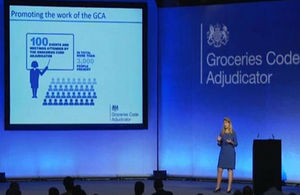
You are probably already aware that the Groceries Code Adjudicator has announced that her first inquiry will be into Tesco's 'supply chain bullying'. Of course this is not the first inquiry to touch Tesco's fallen angel procurement, it joins those of the Serious Fraud Office and the Financial Reporting Council.

You may have thought this was an appropriate time for the newly badged Chartered Institute of Procurement and Supply to show its teeth too, but I was amazed to learn that David Noble, CIPS CX response to the news of the Groceries Code Adjudicator's inquiry was:
"This remedial action is tantamount to closing the stable door once the horse has bolted"
What on earth is the business world to understand from such a platitude? Surely, CIPS are not advocating the potential breach of the Code should not be investigated? What action are CIPS proposing to take in demonstrating its own Ethical Code has teeth? Would this not have been the right time for CIPS to have championed the Inquiry and champion good supply chain management practice?


Monday, 22 September 2014

That's another fine mess for Tesco procurement

There was a time when Tesco was held up as the exemplar for procurement; that changed with Horsemeat. But today things just got significantly worse and a strategy of late payment for suppliers paralleled with charging suppliers for prominent placement seems to have led to 10% fall in share price and significant reputational damage. Euphemistically this is referred to as 'profit overstatement'. Will CIPS' condemn this as unethical and flex the new disciplinary process?

But while the big news story was on Tesco's 'overstatement', tucked away inside the Times was a related story about one of Tesco's suppliers, Moo Free Chocolates. Moo Free Chocolates have named and shamed Tesco in a late payment dispute - Tesco, it is claimed took five months to pay £6,000 while no such problems were eencounteredwith Sainsbury's and Waitrose.

Wouldn't it be interesting if the main political parties, who are now holding their Conferences, announced, that if they win the election, they will introduce a naming and shaming register of late payments - perhaps that would be the single best thing they could do to help SMEs!

Monday, 15 September 2014

Phones4U rings out a need to understand power/dependency

The news that Phone4U has been forced into liquidation as a result of its strategic suppliers opting to no longer supply means that nearly 6,000 workers will understandably view any talk of a recovery with significiant scepticism. The market and government tend to forget that failed businesses bring personal traumas and scared memories. Phoens4U struck me as great on customer service and providing a useful offer - I have had many phones through them over the years and was always impressed by the staff who dealt with me - my heart goes out to them.

But the decisions of Vodafone, O2 and EE to no longer contract with Phones4U demonstrate the importance of understanding and recognising the power/dependency relationship in procurement. Clearly those big providers have developed an alternative business model of cutting out the middle man questioned their added value. But how did Phone4U addresses these former partnerships over the years? Did they view the partnerships as not only a significant procurement risk or even they recognise the potential for the supply chain to close the firm?

We can only hope that negotiating strategy of Phones4U was not a major contribuor to its demise but when O2 withdrew as a supplier back in February warning bells must have sounded. But warning bells must also sound for all those businesses which are dependent on those providers for delivery of their services - do you consider your business as preferred customer of, for example, Vodafone, or are you merely dependent on them?

Thursday, 29 May 2014

NHS Procurement Tsar meets the Fat Controllers.

The NHS' new procurement tsar looks as if they may have an interesting first challenge - working out
a procurement strategy for 'fat clubs'. The National Institute of Health and Care Excellence (NICE) has endorsed three providers who can deliver, what appears to be, NHS funded places at 'fat clubs'.

The challenge now is how the Tsar will approach the procurement of 'fat clubs' to maximise the purchasing power of the NHS.

With only three providers operating through a network of local clubs we should see some interesting procurement questions answered.
  1. Are the local providers endorsed by NICE?
  2. Who would be the contracting bodies - the national or local providers?
  3. Will payment by results be used?
  4. Will the providers collude and carve delivery?
  5. How will alternative providers respond to potentially be excluded from delivering the service as they don't have NICE endorsement?
  6. How will the EU procurement rule be complied with?
  7. Somewhat tongue in cheek, will we see a lean approach pursued?
  8. What evaluation weighting will be used?
  9. Will the Tsar be able to shape up?

Monday, 19 May 2014

A Mars a day doesn't help procurement pay.

Today we have heard that Mars UK have revised their terms of doing business and expect suppliers to wait 120 days (as opposed to the previous 60 days) for payment. Alternatively, it is reported, suppliers can access supply chain finance, for a reduced payment in 10 days.

Only last week I discussed the issue of late payment and I have to admit I am surprised it is a symptom of the economic recovery as opposed to the recession. Nevertheless, it can be assumed Mars UK have a strategy behind this new policy which suppliers, in turn will have to decide on their response. Now there is a danger that others will feel this is the way forward and something to be copied - so a few thoughts:

  1. How dependent are you on your suppliers? If you need your suppliers more than they need you they may chose to say "no thanks";
  2. How easy is it for you suppliers to find alternative customers? If it is easy for suppliers to find alternative customers they may just opt to give those customers preference over you;
  3. How competitive are your competitors? If your competitors are also using the same suppliers don't be surprised that they offer your suppliers more attractive terms to suck out your supply source?
  4. Have you existing contracts in place which state the existing terms? Don't be surprised if suppliers decide to enforce those terms unless you give them something in return, for example a longer term commitment;
  5. What will you do if suppliers just say "okay, but in that case the price is higher and lead time longer"?
  6. Have you thought what you will do if the suppliers just say 'no' - how will you mitigate against that risk?

Monday, 12 May 2014

Do you really try to become a preferred customer?

18 months ago I co-authored a Whitepaper warning that adopting a short-term approach to procurement strategy could prove detrimental when recovery from the Great Recession arrives. As we approach elections in the UK we are told recovery has been reached, whether or not you feel and see that is debatable.

Today's Financial Times reports on research for the European Payment Index (EPI) that suggests, across the EU, €360bn has been written off as a result or late payment of bills and invoices. The research considered responses from the 31 European companies plus Turkey and Russia. It appears that suppliers are waiting 47 days beyond the contracted term for payment. Now just think what the impact would be on you if your employer told you that you would have to wait a month and a half for your salary.

Of course the 47 days is a sweeping generalisation, but how do you think your firm's payment record would compare if benchmarked against Sweden's delay in payment in the public sector of seven days and with days in the private sector? The Swedes have adopted a system of fining debtors with automatic penalties to protect suppliers.

In the grand scheme of procurement swings and roundabouts there is a time when suppliers have to make decisions between competing buyers as to which should receive preferential service, or indeed delivery at all. When there are plenty of alternative suppliers the buyer can perhaps be a bit complacent and arrogant, assuming suppliers will want to supply. But if you have a history of late payment, don't expect suppliers to be beating a path to supply you, others, perhaps those based in Sweden, can expect to be more attractive for the delivery of quality, price and lead-time. But things could be even worse: what if that critical source for your manufacturing line goes into liquidation due to cash-flow problems?

The report should be a warning that it may well be time to get your payment process improved before your suppliers opt to delay in supplying you.

Friday, 2 May 2014

Does Cameron understand procurement strategy?

A few months ago I drew attention to the imbalance of power between the Ministry of Justice and the legal profession, specifically the threat relating to changes in the Legal Aid system. The changes to Legal Aid mean a 30% reduction in Legal Aid cut in fees paid to barristers.

Yesterday we saw the ironic court scene of Alexander Cameron QC, the Prime Minister's brother, arguing that the trial of a £4.5m fraud case should be delayed as a result of the inability of the defendants to access lawyers prepared to defend them under the new Legal Aid rules. Barristers have effectively said, "if that's what the rate is, no thanks".

The drama is even more bizarre in that Alex Cameron had decided to argue that the case could not continue, without charging for his fee!

From a procurement perspective this reminds us of three strategies:
  1. Poistioning relative power of the buyer/supplier relationship. The barristers have the power to sell their services outside the Legal Aid system, so they can walk away without great pain;
  2. A focus on price reduction can compromise delivery. The suppliers in this case have said to MoJ the price you are prepared to pay is not attractive enough for us to deliver; and
  3. Achieving 'preferred customer' disorts the market in favour of the buyer. In this example, Alex Cameron delivered his services free of charge.
While the MoJ case is of interest and relevant to procurement, there is a real danger we are approaching replication elsewhere in the system. For example, think of the threat of the Care Quality Commission to penalise those who on deliver 15 minute home visits to those with dementia. The buyers should of course specify for longer visits based on outcomes to be delivered as opposed to inputs, and in turn pay a rate which is affordable for the providers. But what would happen if the threat continues and the care providers say "if that's what the rate is, no thanks"? Well, I suspect the health and social services commissioners would be in crisis, the Department of Health have no means to deliver the care, there are no longer sufficient places for public sector residential care in either hospitals or homes. Visualise the political impact if these services started to collapse the week before the election?

Friday, 4 April 2014

Procurement Space Chess with Russian music

It matters little which side of the fence you sit on the politics of Crimea but what we are observing is an amazing game of strategy, negotiation and brinkmanship. While the West have huffed and puffed Putin has called checkmate and the threats of the recent past have done little to affect change.

This is clearly a historical event being played out and we can expect strategists to dissect and debate for many years to come. But does anyone seriously believe that Russia will now walk away from the Crimea? Did anyone seriously believe that once the Russian masses assembled for 'military exercises' that Putin didn't mean business?

So we observed, powerless, from the sidelines, as Russian soldiers walked in and redrew the Russian border.

Now we find that NASA employees and CONTRACTORS  have to freeze co-operation with Russia. While the International Space Station is excluded from the break in collaboration, that must only be due to the US deciding that it would be too painful to break off that co-operation. But surely that just signals to Russia how they can inflict pain on the West.

As we know the US has also lost its independence from Russia to even launch people into space - that's been 'outsourced' to Russia. At some stage the US must have decided on a make/buy decision on space launches, now I suspect they are questioning their 'what if' analysis.

Hasn't the space programme always been about economic benefits. Wasn't the reason for co-operation with Russia about economic benefits and gaining economic advantage. We're now seeing the economic advantages being compromised for political rhetoric. But what if Russia decides that co-oepration with the US is no longer advantageous? What if Russia now starts to co-operative with a different partner, one which shares its longer-term view? Wouldn't those scenarios be detrimental to the US?

Monday, 10 March 2014

Is the NHS suffering from procurement Tinnitus?


Tinnitus: Is a term that describes any sound a person can hear from inside their body rather than from an outside source.
Today, I read in the Financial Times two parallel reports on the same page, one with the headline "NHS prepares £1.2 bn outsourcing deals", and the other adjacent report with the headline "Bidders pull out of elderly services contest" (sadly the web versions have different titles).

You may also recall that last month I discussed the poor stakeholder management associated with care.data and how the communications strategy needed to be improved. One of the big issues relating to patients concerns with care.data is the fear that their health records will be accessible to the private sector. The notion that £1.2 bn of NHS 'pioneer contracts' for scandal-hit Staffordshire, along with Stoke on Trent, will be let for all cancer and end-of-life treatment for children and adults is unlikely to reduce those fears. How will private sector providers be able to deliver the services without access to the records? Yet, nowhere in the reports is that risk mentioned.

However, that shouldn't be the NHS main issue. Perhaps they need to consider how the lessons from the parallel report on what looks like a failed procurement exercise in Cambridgeshire will be learnt. It is reported that in Cambridgeshire and Peterborough a contract for elderly care, yes, something similar to the Staffs and Stoke-on-Trent contract, has suffered from providers opting out. Serco, Northamptonshire Healthcare Foundation Trust, Capita and Circle are all reported to have withdrawn, supposedly due to the gap in what the Trust are prepared to pay and what the providers think it will cost. Are the providers who have withdrawn correct or the three remaining providers and the Trust right?