Back in 2013 I discussed the problems Texas was facing with its death penalty regime due to a supplier no longer wanting to supply. Today there are reports that there are no longer any legal supplies of the drugs at all in USA, after Pfzer, the last remaining supplier, decided to cut supply.
This is a remarkable example of how dominant power impacts on procurement. While few would doubt the USA has massive buyer power collectively over markets, in this case, the USA have discovered that dominant power can also be with the supplier.
Like yesterday's posting, on Archaeologists, this is another clear example of a bottleneck item. It is also an interesting example of the difficulties which can be faced in finding substitutes.
Showing posts with label SCM. Show all posts
Sunday, 15 May 2016
Wednesday, 29 July 2015
Child labour and talk are too cheap - meaningful action is what counts.
Does David Cameron actually believe that companies have that sort of supply chain visibility or even the skills? Does the public sector have that sort of visibility and skills?
The initiative will require companies to declare what checks they have in place. What would be considered acceptable robust checks? Will Cameron's minister who leads on public procurement be in a position to be accountable to parliament and the electorate for the steps public procurement have taken - if not it is a bit hypocritical to not to lead by example. Perhaps Cameron should add this to his wish-list of EU reforms - that will be popular but then isn't cutting red tape a big issue too!
How is the initiative going to be communicated to UK companies? August is unlikely to be the best time to raise awareness.
In companies which do become aware of the initiative who will have ownership and be accountable? Will it be allocated to the Health & Safety Officer like so much of environmental purchasing, the CFO as part of their accounting statements, the CPO who control so little of the budget decisions, marketing who will want to put a good gloss on whatever the reality is, or the risk manager who is often a voice crying in the wilderness? Whoever holds responsibility will be a good indicator of how seriously the initiative is taken - why doesn't Cameron insist there's a named responsible owner?
I assume the statement will need to be audited in some form, who will do that?
What if the companies don't comply? It appears the sanction is criticism! Is that supposed to be a serious sanction? I have previously discussed reputational risk linked with supply chain abuses and how it really doesn't seem to manifest itself in the market. I have also questioned the conviction of politicians to see some of these great ideas through to the end rather than just looking for something to say in a speech.
So, do I expect to see some discernible change in five years against today's benchmark? Actually is there a benchmark against which progress will be measured?
PS 31 July 2015 - here's a link to the relevant section of the Modern Slavery Act 2015
Sunday, 8 February 2015
Is Tesco's procurement strategy always wrong?
Readers of this blog will know I haven't been overly sympathetic of all Tesco's woes, however, today I find myself loosely in agreement with a Tesco approach that is the latest focus of criticism. The Sunday Times reports Tesco threatens new squeeze on suppliers' - the criticism based on alleged letters send by Tesco to suppliers demanding a price decrease due to the recent fall in commodity prices.
I do not know the precise wording of Tesco's contracts, but if they were on a Rise and Fall basis, and the supplies in question are directly linked to commodity prices, then I would expect to see price decreases flowing through too. Of course, when the commodity prices inevitably rise, it would then also be fair and reasonable for Tesco to accept corresponding price rises.
I have spent years observing buyers accept the price rises, and on many occasions they have been unjustifiably linked to RPI, etc., yet those same buyers rarely chase the linked price decreases - that's just bad price management and bad procurement. That laissez faire approach to procurement costs businesses money and the profession reputation.
Having said that, if Tesco haven't contracted on a R&F basis, then their cavalier attitude to supplier management suggests they haven't learnt anything of late and deserve all the criticism they get. Nevertheless, perhaps, given the recent history, Tesco may have approached this initiative slightly differently and sensitively.
I do not know the precise wording of Tesco's contracts, but if they were on a Rise and Fall basis, and the supplies in question are directly linked to commodity prices, then I would expect to see price decreases flowing through too. Of course, when the commodity prices inevitably rise, it would then also be fair and reasonable for Tesco to accept corresponding price rises.
I have spent years observing buyers accept the price rises, and on many occasions they have been unjustifiably linked to RPI, etc., yet those same buyers rarely chase the linked price decreases - that's just bad price management and bad procurement. That laissez faire approach to procurement costs businesses money and the profession reputation.
Having said that, if Tesco haven't contracted on a R&F basis, then their cavalier attitude to supplier management suggests they haven't learnt anything of late and deserve all the criticism they get. Nevertheless, perhaps, given the recent history, Tesco may have approached this initiative slightly differently and sensitively.
Friday, 6 February 2015
Tesco, the Groceries Code Adjudicator and CIPS
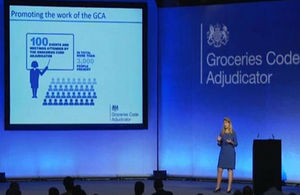
You are probably already aware that the Groceries Code Adjudicator has announced that her first inquiry will be into Tesco's 'supply chain bullying'. Of course this is not the first inquiry to touch Tesco's fallen angel procurement, it joins those of the Serious Fraud Office and the Financial Reporting Council.
You may have thought this was an appropriate time for the newly badged Chartered Institute of Procurement and Supply to show its teeth too, but I was amazed to learn that David Noble, CIPS CX response to the news of the Groceries Code Adjudicator's inquiry was:
"This remedial action is tantamount to closing the stable door once the horse has bolted"What on earth is the business world to understand from such a platitude? Surely, CIPS are not advocating the potential breach of the Code should not be investigated? What action are CIPS proposing to take in demonstrating its own Ethical Code has teeth? Would this not have been the right time for CIPS to have championed the Inquiry and champion good supply chain management practice?
Friday, 19 December 2014
Monday, 22 September 2014
That's another fine mess for Tesco procurement
There was a time when Tesco was held up as the exemplar for procurement; that changed with Horsemeat. But today things just got significantly worse and a strategy of late payment for suppliers paralleled with charging suppliers for prominent placement seems to have led to 10% fall in share price and significant reputational damage. Euphemistically this is referred to as 'profit overstatement'. Will CIPS' condemn this as unethical and flex the new disciplinary process?
But while the big news story was on Tesco's 'overstatement', tucked away inside the Times was a related story about one of Tesco's suppliers, Moo Free Chocolates. Moo Free Chocolates have named and shamed Tesco in a late payment dispute - Tesco, it is claimed took five months to pay £6,000 while no such problems were eencounteredwith Sainsbury's and Waitrose.
Wouldn't it be interesting if the main political parties, who are now holding their Conferences, announced, that if they win the election, they will introduce a naming and shaming register of late payments - perhaps that would be the single best thing they could do to help SMEs!
But while the big news story was on Tesco's 'overstatement', tucked away inside the Times was a related story about one of Tesco's suppliers, Moo Free Chocolates. Moo Free Chocolates have named and shamed Tesco in a late payment dispute - Tesco, it is claimed took five months to pay £6,000 while no such problems were eencounteredwith Sainsbury's and Waitrose.
Wouldn't it be interesting if the main political parties, who are now holding their Conferences, announced, that if they win the election, they will introduce a naming and shaming register of late payments - perhaps that would be the single best thing they could do to help SMEs!
Wednesday, 20 August 2014
'The Value Chain Shift: Seven future challenges facing top executives' - Book review
The sub-title of this book is really the important point to consider with this book - it is targeted at 'top executives'. An impressive list of contributors set out to answer the 'seven challenges' against a timeline of 2020.
So what are the seven 'future' challenges identified?
- Measuring corporations' cost and contribution to society;
- Managing resource scarcities; Scale and speed;
- Traditional multinationals versus emerging market firms;
- Optimising IT-enabled process and systems in the value chain:
- The role of governance; The organisation design shift;
- How speed affects risks, opportunities and new business models in the value chain;
- Corporate social responsibility: Moving from compliance to value creation in value chain relationships.
Are these really future challenges, and if they are, are they the biggest challenges? Actually I recall some of them being included in Farmer and Taylor's 'Corporate Planning and Procurement' published in 1975, yes, 39 years ago! More recently we could compare New and Westbrook's (2004) 'Understanding Supply Chains', and Brindley's (2004) 'Supply Chain Risk'. So I would have liked to have heard the authors views on what they would put as a compelling argument, to the sceptical top executive on: "if these challenges have been around so long, and a laissez-faire approach has worked so far, what's so different?"
Setting that aside, let's consider some of the chapters. Say the chapter on IT. While I recognise the problems of geographic standardisation of processes and systems, and am currently working on a similar problem, I am really surprised that the whole digital agenda with the imbalance between marketing's adoption and that of the supply chain isn't viewed as a challenge.
I did, however, find the chapter on 'optimal speed' thought provoking and something I hadn't previously considered.
Sadly, I found many of the chapters more like an introduction and lacking in depth - I wanted more.
You could classify them into three categories: 'A statement of the blindingly obvious', 'We wanted to create a model, so we created a need', and the really valuable, 'Have you thought about this?'.
In fairness, let's remember the book is targeted at top executives. If the book is read by top executives and they progress to addressing the challenges, then it will be really beneficial, but for me, and the average procurement specialist, I doubt it is worth £22.15?
Saturday, 16 August 2014
CIPS warning of a pending supply chain crisis points to a bigger concern
I nearly fell of my seat when I read in the latest issue of Supply Management that CIPS CEO warned of a potential supply chain crisis based on a CIPS survey which "found around 80% of supply chain professionals in the UK cannot guarantee there is no malpractice in their supply chain".
Was this a typographical error, a badly constructed survey or misreporting?
Just pause for a moment, does this mean that CIPS, and the 20% of the 'senior business decision makers and supply chain professionals' who responded to the survey actually believe they can guarantee there is no malpractice in their supply chains? If that's what they are saying then their understanding of risk in supply chains appears to be flawed - they are either delusional, lying or fooling themselves.
CIPS' concern shouldn't be with the 80% who acknowledge the risk but the 20% who don't!
If someone came to me and said they could provide such a guarantee I think I may pose the following questions:
Was this a typographical error, a badly constructed survey or misreporting?
Just pause for a moment, does this mean that CIPS, and the 20% of the 'senior business decision makers and supply chain professionals' who responded to the survey actually believe they can guarantee there is no malpractice in their supply chains? If that's what they are saying then their understanding of risk in supply chains appears to be flawed - they are either delusional, lying or fooling themselves.
CIPS' concern shouldn't be with the 80% who acknowledge the risk but the 20% who don't!
If someone came to me and said they could provide such a guarantee I think I may pose the following questions:
- How do you define malpractice in supply chains?
- How could anyone possibly know there is no malpractice in their supply chain?
- How can you give such a guarantee?
- Would you stake your job on that?
- Are you responsible for supply chain risk management?
- Could I see the risk register as I think there may be a need for concern?
When CIPS' CEO warned "that British businesses could be "sleepwalking into another supply chain crisis"", I think he linked that with those who couldn't guarantee no malpractice - conversely, I would caution that the crisis is more likely in the organisations which think they can guarantee there is no malpractice.
Thursday, 21 November 2013
Good news for buyers and workers on Bangladesh factory safety?
Last week I discussed the ongoing problems in Bangladesh clothing manufacturing and the reluctance to pay the agreed minimum wage - thankfully that moved on and agreement was reached. Although I can't help but feel that spirit of responsible manufacturing was somewhat lacking, after all the Prime Minister had to intervene.
Today we have learnt that three stakeholder groups are close to agreement on minimum safety standards (Accord on Fire and Safety in Bangladesh, Alliance for Bangladesh Worker Safety, and National Tripartite Action Plan). This is potentially a good result for the European retailers involved but is it good enough?
The new standards will simplify inspections and therefore reduce costs to the buying organisations. They will also reduce inspection costs and disruption in the factories. Likewise the legally binding commitment of some of the buyers to maintain orders levels for the next two years and to share the cost of factory upgrades are positive steps for the workers.
However, if I was on the Board of one of the buying firms would I be relaxing? No, I don't think so. Consciences may be salved. New standards are good but can Board members of buying firms be sure they will be implemented, and that the standards are of sufficient level that the Board member would feel safe working with those as the minimum standard for the corporate HQ? No, this tentative agreement between such a varied group of stakeholders is likely to reflect consensus on the lowest common denominator as opposed to the best optimum solution for workers and buyers - it is a step in the right direction but not the end of the journey,
CPOs have no cause to relax, they need to complete a risk assessment of the new regime and they need to made sure they are not abdicating responsibility. If the standards aren't high enough and there is another disaster, it won't be good enough the blame the standards - caveat emptor!
The new standards will simplify inspections and therefore reduce costs to the buying organisations. They will also reduce inspection costs and disruption in the factories. Likewise the legally binding commitment of some of the buyers to maintain orders levels for the next two years and to share the cost of factory upgrades are positive steps for the workers.
However, if I was on the Board of one of the buying firms would I be relaxing? No, I don't think so. Consciences may be salved. New standards are good but can Board members of buying firms be sure they will be implemented, and that the standards are of sufficient level that the Board member would feel safe working with those as the minimum standard for the corporate HQ? No, this tentative agreement between such a varied group of stakeholders is likely to reflect consensus on the lowest common denominator as opposed to the best optimum solution for workers and buyers - it is a step in the right direction but not the end of the journey,
CPOs have no cause to relax, they need to complete a risk assessment of the new regime and they need to made sure they are not abdicating responsibility. If the standards aren't high enough and there is another disaster, it won't be good enough the blame the standards - caveat emptor!
Wednesday, 13 November 2013
Retail clothing buyers to make a difference through contracts?
It's not remotely clear what actually changed but here's a suggestion.
Given the UK debate on the cost of living and whether the living wage should be mandated in government contracts, that the average wage of a garment factory worker in Bangladesh (making UK High Street brands) is only $39 per month, that police have just used rubber bullets and teargas to quash a protest of 400,000 garment workers seeking a monthly wage of $100 (£62) which led to production stoppages in 200 factories, that the Garment Manufacturers and Exporters Association have just rejected the recommendation of the Bangladesh Minimum Wage Board to pay a rate of $67 per month, why don't UK High Street retailers collectively place a contractual obligation on their suppliers to pay the minimum wage agreed by the Bangladesh Minimum Wage Board, backdated to its date of recommendation? Is that too much to demand? Too much of a Christmas present? Too reasonable? Too responsible?
P.S. 14 November 2013 following the intervention of the Bangladesh Prime Minister the Garment Manufacturers and Exporter Association have accepted the Board's recommendation. UK buyers should still enforce adherence through contracts though otherwise there's a risk that implementation will not take place.
Sunday, 6 October 2013
Time to take a stand on UK slavery in supply chain management
This weeks cover story of the Sunday Times Magazine heaps more shame on retail supply chain management and the suggestion that UK supermarkets are best of bred.
I've frequently discussed the issues of supply chain management and even advocated that we need 'undercover supply chain managers'. Horsemeat and pork of poor providence, foreign factories with unacceptable health and safety, and poor working conditions - we've discussed them all even though the Public Administration Select Committee were led to believe retail procurement is an exemplar.
But there has to be something seriously wrong when the Sunday Times Magazine appears able to expose appalling supply chain behaviour of UK supermarkets. What we learn on pages 22-27 of the Magazine and also in the main paper is that some UK supermarkets pursuit of 'value' means slave workers, on 17-hour days, suffering beatings and sexual abuse, living in squalor, for £2.80 per day. That's a very perverse view of responsible procurement. A very perverse view of supply chain management. A very strange view of contract management. Yet these modern day slaves are not in some far flung outpost, they are working in the UK and part of the supply chains to us.
The Home Secretary plans to introduce an anti-slavery bill and Chris Byrant MP, the shadow immigration minister hopes to introduce a Transparency in Supply Chains bill. The Sunday Times has announced it is fronting a Britain's Secret Slaves campaign. The supermarkets can be expected to hold up their hands and tell us through a spate of full-page advertisements it will be address the issues after once again being exposed for poor supply chain management - but clearly the claims of learning the lessons of the past ring hollow now.
Yet there is one voice which seems silent on these issues, CIPS. We love the glory which comes from the Purchasing Manager's Index being regularly being cited as an economic indicator - but where is CIPS actually taking a stand on retail supply chain management? If CIPS don't take hold of this very quickly the whole profession risks being discredited.
Wednesday, 18 September 2013
The clothing of invisible supply chain management
Anyway, now we learn that, if something had been committed to, it appears as if it may have been insufficient. I say that as we have now learnt of more problems in retail clothing supply chains with workers producing H&M clothing thought to be fainting, allegedly as a result of not being paid enough to buy food.
This is has a certain echo of yesterday's blog where I discussed the latest iteration of retail food supply chain failures.
As yesterday, the key lesson is that the response to retail clothing supply chain management was not effective - it failed to address what are likely to have been systemic weakness which all point to ineffective change.
The lesson for us all is that procurement risk management and contract management are not 'one offs' -they need to be embedded in culture. To me that's the question which all those responsible for procurement now need to test in their own organisations.
I also find it ironic that when giving evidence to the Public Administration Select Committee, it was advocated that public procurement should try to emulate retail procurement - perhaps that argument needs to be considered with big caveats!
Tuesday, 17 September 2013
Free range humble pie supply chains at Tesco
Yet Tesco have found themselves in another iteration of the same mess. This time supposedly Red Tractor British pork chops were found to lack the appropriate supply chain management performance. The Red Tractor label is supposed to provide an assurance of safety, hygiene and animal welfare - that mark of assurance has now been compromised by Tesco. Tesco didn't even appear aware that 'British' pork chops were actually Dutch!
'Mislabelling' seems to have become a euphemism for fraud, incompetence and inadequate supply chain management, oh yes, and over-pricing!
The key lesson here is that the response to the horsemeat crisis was not effective - it failed to address what are likely to have been systemic weakness which all point to ineffective change. Clearly the response to horsemeat has not been effective.
The lesson for us all is that procurement risk management and contract management are not 'one offs' -they need to be embedded in culture. To me that is the latest Tesco lesson. To me that's the question which all those responsible for procurement now need to test in their own organisations.
Saturday, 7 September 2013
M&S Bizarre ways
We know M&S has diversified and is now a bank - you can get one of their credit cards with an APR of 16.9% - I wonder what Mr Marks and Mr Spencer would have thought of that diversification strategy and the idea that customers would pay over the odds to acquire something today and then pay later. But then Mr Marks & Mr Spencer grew up in different times - banks were the friends of business and they didn't bring businesses and countries to their knees.
Mr Marks & Mr Spencer may also find the whole talk of a 'Plan A' which addresses CSR quite bizarre. That's a long way from haggling with their suppliers then handing over the cash. But like 'Inspired by ...' what do such claims really mean?
I suspect Mr Marks & Mr Spencer would find it not only bizarre but be appalled by the notion of refusing to pay their suppliers in a reasonable time.
Yet now we see the convergence of banking, CSR, supply chains and a firm going through a mid-life crisis. The result, in spite of being signed up to CSR, and the Prompt Payment Code is to reach for the contract terms and beat the small guy over the head. So now it appears M&S have depersonalised business relationships and told their clothing suppliers they will slow down their payment, from 60 days to 75 days after receipt of goods. While supply chain financing is being viewed elsewhere as a panacea (and ironically M&S have made that commitment too) something seems to have got lost on the road to recovery with M&S. We can only assume suppliers will suffer, and that all the talk of M&S being committed to ethical trade has got lost in translation. Like 'Inspired by ...' what does M&S commitment really mean?
Now here's a dilemma: is it ethical to charge your customers 16.9% APR to buy your goods and then delay paying your suppliers within say 30 days, but not pay your suppliers 16.9% APR for the delayed payment?
Ethics and behaviour at M&S, to Mr Marks and Mr Spencer, may appear very, very bizarre.
Thursday, 8 August 2013
Do we need an Undercover Supply Manager
I'm sure you've caught at
least a glimpse of those TV programmes where the boss goes undercover to find
out what it is really like working in their firm. Wouldn't it be interesting if
there was a buyer version, where the buyer goes undercover to find out what it
is really like working in their suppliers firms? A good start would be if
those who award 'best of bred status' did the same.
For example, it was only in
May
that Gartner crowned Apple king of the supply chain. At the time I was puzzled how,
given Apple's
supply chain problems,
particularly with Foxconn, they could be positioned as the exemplar.
Now we learn that Foxconn's peculiar style of human resource management does not appear to
be isolated to China but is also being applied in the Czech Republic. The Sunday Times reported on the research of Andrijasevic and Saccheto. We learn of accommodation in which 80 workers
share a dozen showers and two bathrooms, 12 hour shifts punctuated with only a
30 minute lunch break and two 15 minute breaks, excessively low pay and fines
imposed for sitting down.
And one of Foxconn’s three
Czech factories, in Kutna Hora, no longer makes products for Apple according to
the reports. Why? Quite simply because Foxconn reacted to increased demands
from their workers - “when the workers started getting together to demand better working
conditions, the division was closed”.
Is it really appropriate
for Apple, an exemplar, to put up with these working practices and such
behavior in one of their key suppliers?
Our memories seem to trick
us very quickly into forgetting too quickly the working conditions which led to
the deaths in Bangladesh and how supply chain management can make a
difference. Nobody
is accusing Foxconn of putting its workers in the obvious danger we saw in that
terrible Bangladesh factory collapse, but perhaps we need more 'walking in the
shoes' of the factory workers if we really want to understand what it is like
to be a supplier to some of our brand leaders.
Previously published as a guest blog on Spendmatters, 16 July 2013
Tuesday, 16 April 2013
How seriously have the government taken the food supply chain?
I have been discussing the food supply chain for months now. It seems horsemeat has had such a massive impact on retail that it has reshaped both procurement risk management and consumer buying behaviour too. Yet, despite all the concern expressed by politicians it is only today that we learn the government has ordered a review of Britain's food chain and the risks to health. I really think we have been dragging our feet on this one; let's hope it has not been injurious to public health.
Of course meat scandals aren't unique to the UK but I wonder how much attention is being given to learning from other countries responses. While we talk of delisting suppliers and rapping them across the knuckles, others aren't just so laissez faire. If the UK are considering others responses I would be interested to hear how effective and transferable they consider the response from Johannesburg, specifically the risk of 10 years in prison for false food labelling.
While lost sales may be a real cause for concern we still don't seem to be getting on top of the situation, in fact if anything things are getting worse. There needs to be something which really says this will never happen again - perhaps a jail sentence is required or a ban from supplying any food products anywhere in Europe. What are the chances?
Friday, 12 April 2013
The supply chain behind might be a bit of a mess
Of course this isn't the first time we have discussed Toyota's supply chain woes and my heart goes out to all those buyers who must been accessing their personal procurement risk management. One recall is is understandable but this is becoming a habit - I suppose it means you get your car washed for free.
But then is it fair to point the finger at the automotive industry - is this not just just another version of the horsemeat supply chain problems which even this week refuse to gallop of into the sunset. In spite of unsuccessful ministerial efforts to off-shore the blame and say there was no risk to health we may now have a health risk.
Nevertheless, pause, take a step back and recall that the rail franchise disaster also appeared to be based on human error in the evaluation formulae.
Then reflect on the PASC evidence that the adoption of 'lean' (which had its origins in Toyota) will be the panacea to all central government public procurement woes. Personally, I'm a great believer in Lean, indeed its application in public procurement was the focus of my MSc, but lean will not solve public procurement's core problems which appear to be much more related to culture and resistance to change.
Regardless of the sector, perhaps the real human error lies in trying to believe that systems work in absence of people and not recognising mistakes happen, therefore you need to put in place a comprehensive procurement risk management system. The car manufactures do not appear to have had the risk profile and impact right for the airbag issue.
Lean, for all it's benefits doesn't remove risk - ask the guy in front if he happens to be driving a Toyota, Honda or Nissan.
P.S. 12 April 2013 it has now become clear that Toyota have joined an automotive industry risk community with a strategic approach to risk management - the question remains though whether the proposed approach is too strategic to have identified the airbag risk?
Wednesday, 30 January 2013
On a wing and a prayer: lessons from Burgergate
I discussed the Tesco's horsemeat mess, now known as 'Burgergate', a few days ago. A procurement mess which has led to procurement being discussed at 'the top table', family dinner tables and restaurant tables the length and breadth of the country.
It's featured on every main UK news channel (even on Sky News as I write). Today it was trotted out in a webinar I was taking today with colleagues in India and USA. It is now though Horseburgers could have been on the UK plate for at least a year. Burgergate has cost Tesco around £1m so far.
Be careful what you wish for when you want a higher profile for a profession!
I won't cover the issues discussed in today's excellent Channel 4 News blog - certainty worth a read. It is also worth having a look at the statement issued by Tesco today, one statement itself is interesting:
It's featured on every main UK news channel (even on Sky News as I write). Today it was trotted out in a webinar I was taking today with colleagues in India and USA. It is now though Horseburgers could have been on the UK plate for at least a year. Burgergate has cost Tesco around £1m so far.
Be careful what you wish for when you want a higher profile for a profession!
I won't cover the issues discussed in today's excellent Channel 4 News blog - certainty worth a read. It is also worth having a look at the statement issued by Tesco today, one statement itself is interesting:
"The evidence tells us that our frozen burger supplier, Silvercrest, used meat in our products that did not come from the list of approved suppliers we gave them,"
Monday, 19 November 2012
Big Data, Fukushima and applied research to support procurement
There haven't been many procurement lessons learnt from the Japanese Fukushima disaster. It is also rare that we hear of any useful applied research in SCM and Procurement. So when both converge in a Financial Times report on the work of Manchester Business School with BMW my attention was grabbed.
The background report itself is an interesting story relating to Supply Risk Management and development of an innovative tool. Specifically, following the Fukushima disaster, one of BMW's tier one suppliers couldn't deliver due to a lower tier subcontractor being within the Fukushima fallout zone - as a result BMW identified a need for greater supply chain insight. That need seems to have led to the students developing a tool for analysing internet content (Big Data), which could help with supply risk management. The tools being tested at the present are reported to: "read, search, sort and select large amounts of information in a systematic way, building up real-time profiles of each supplier and sub-supplier". That strikes me as a clever tool.
Of the examples cited one identified a risk of a supplier being unable to pay wages through content found in a local newspaper, while another relates to identifying a new supplier in Mexico.
It is not clear whether MBS are developing a marketing plan for their solution, but hat's off to them and the potential to reduce their student debt.
The background report itself is an interesting story relating to Supply Risk Management and development of an innovative tool. Specifically, following the Fukushima disaster, one of BMW's tier one suppliers couldn't deliver due to a lower tier subcontractor being within the Fukushima fallout zone - as a result BMW identified a need for greater supply chain insight. That need seems to have led to the students developing a tool for analysing internet content (Big Data), which could help with supply risk management. The tools being tested at the present are reported to: "read, search, sort and select large amounts of information in a systematic way, building up real-time profiles of each supplier and sub-supplier". That strikes me as a clever tool.
Of the examples cited one identified a risk of a supplier being unable to pay wages through content found in a local newspaper, while another relates to identifying a new supplier in Mexico.
It is not clear whether MBS are developing a marketing plan for their solution, but hat's off to them and the potential to reduce their student debt.
Thursday, 1 November 2012
Comet brought down by supply chain
If you are one of the 7,000 employees of Comet, the high-street electrical retailer, you could understandably not share the euphoria or even care that the UK has allegedly come out of recession. You may also feel that managing the economy is nothing more than rhetoric - real-life makes you wonder what happens to you when Comet goes into administration next Thursday.
Just as alien will be the language of SRM, upstream management, and trade credit insurance but they are what is really behind the predicament.
As we have been discussing all too often in this blog, cash flow and the absence of credit are throttling businesses - Comet is just the latest high profile casualty. The banking crisis now has a different meaning! Yet at the same time suppliers are considering the risk of whether their customers are a good credit risk.
This is another twist of the Lotus discussion, but this time the problem appears to be Comet's difficulty in obtaining trade credit insurance. Trade credit insurance would provide protection to suppliers in the event of Comet's failure. Ironically the risk of failure is increased as a result of a lack of suppliers confidence - it's a vicious circle. This is calling for new procurement skills and strategies; the need to reassure the supply market that the buying organisation is a good risk.
Yet at the same time how much of a suppliers lack of confidence is coloured by a lack of buyer humility and benevolence having been shown to the supplier when performance was not as well as expected. To a certain extent 'the ball is now on the other foot'. But there's also a systemic risk - how can buyers convince their Accounts Payable of the need to accelerate payment. Could this be the time for pCards to step in with the card issuers effectively providing the trade credit insurance? Could/should the government intervene?
I recently discussed Supply Chain Financing although that was from the perspective of the buyer supporting the supplier. This is different with suppliers potentially holding buyers to ransom - will they take the risk? Will suppliers seek to renegotiate prices and terms in return? It is clear that the aftershocks of the financial crisis are like an electrical current with shocks going up and down the supply chain but increasing in magnitude, velocity and frequency.
Just as alien will be the language of SRM, upstream management, and trade credit insurance but they are what is really behind the predicament.
As we have been discussing all too often in this blog, cash flow and the absence of credit are throttling businesses - Comet is just the latest high profile casualty. The banking crisis now has a different meaning! Yet at the same time suppliers are considering the risk of whether their customers are a good credit risk.
This is another twist of the Lotus discussion, but this time the problem appears to be Comet's difficulty in obtaining trade credit insurance. Trade credit insurance would provide protection to suppliers in the event of Comet's failure. Ironically the risk of failure is increased as a result of a lack of suppliers confidence - it's a vicious circle. This is calling for new procurement skills and strategies; the need to reassure the supply market that the buying organisation is a good risk.
Yet at the same time how much of a suppliers lack of confidence is coloured by a lack of buyer humility and benevolence having been shown to the supplier when performance was not as well as expected. To a certain extent 'the ball is now on the other foot'. But there's also a systemic risk - how can buyers convince their Accounts Payable of the need to accelerate payment. Could this be the time for pCards to step in with the card issuers effectively providing the trade credit insurance? Could/should the government intervene?
I recently discussed Supply Chain Financing although that was from the perspective of the buyer supporting the supplier. This is different with suppliers potentially holding buyers to ransom - will they take the risk? Will suppliers seek to renegotiate prices and terms in return? It is clear that the aftershocks of the financial crisis are like an electrical current with shocks going up and down the supply chain but increasing in magnitude, velocity and frequency.
Subscribe to:
Posts (Atom)