Showing posts with label fraud. Show all posts

Saturday, 29 April 2017

If Google and Facebook then ...

How on earth did Google and Facebook fall for such a basic and traditional scam that they have lost $100m by paying false invoices?  If they could, could you also be vulnerable?

I've discussed this type of fraud so often it almost makes me doubt reiterating, yet surely the evidence from both Google and Facebook is that the lessons are not being learnt? If they are being learnt is there a loophole which yet remains unplugged.


  1. There needs to be a clear separation of roles between Procurement, Finance and receipt of delivery;
  2. Procurement alone should have the responsibility for adding new vendors to the database of creditors;
  3. Ensure due diligence in validating creditors bank details;
  4. Every invoice needs to be cross-matched with a Purchase Order;
  5. Have a regular spend analysis which flags up where the money is going and use that to establish where there are strategic contract gaps;
  6. Have contracts on an integrated S2P system or at the very least linked to the P2P;
  7. Use the P2P matching to manage creditors payments;
  8. Have a strategic approach to procurement risk management.
Let face it, if it could happen to Google and Facebook, it could being happening to you.

You can read more about establishing vulnerability to fraud at the TCS blog or my article

Wednesday, 18 January 2017

Procurement Fraud on the increase - you are vulnerable too

The 2016/17 Global Fraud and Risk Report by Kroll has just been published and it indicates an increase for 17% to 26% in 'vendor, supplier or procurement fraud'.

We've been discussing procurement fraud for some time and only yesterday Spendmatters' Peter Smith raised the question of why those involved risk their careers and potential jail sentences for such low returns. I think the answer to Peter's question is not only greed but the probability that the perpetrators will not be caught and the easy of completion.

What I have often come across are processes which are so fundamentally weak and lacking in robustness that I remain amazed how organisations are not more aware of the significant risks they face - are they in denial or just unaware?

The reality is that no organisation can have zero risk of supplier, vendor or procurement fraud but all can certainly take steps to reduce vulnerability - you may find my whitepaper of interest.

The publication of Kroll's Report provides an opportunity for those in procurement to highlight this risk, ask how it is being addressed corporately, and take the lead in developing a robust approach. Let's remember that the Bribery Act places a responsibility on organisations to prevent fraud - that's not passive but about being proactive in identifying vulnerabilities and taking steps to reduce the risks.


Thursday, 12 May 2016

Anti-Corruption Summit - Is Afghanistan's Procurement Strategy right for others?

Linked to today's Anti-Corruption summit in London, the Prime Minister's Office have published 'Against Corruption: A Collection of Essays.  One of the essays, by Afghanistan's President, specifically addresses procurement.

In that essay President Ghani argues that a failure of individual and institutional accountability is at the heart of corruption; that is compounded by fragmented institutions. The panacea, to Ghani, is strong political leadership:
In fragmented systems, only strong, national political leadership can tackle corruption at its roots. This is because only the top leadership can look across the different areas and ministries where corruption happens, in order to provide an effective agenda for reform. By demonstrating top commitment through positive action, even fragmented systems can build coalition with internal and external reformers.
 Ghani reports that public procurement in Afghanistan suffers from:

  • bid rigging, including, bids received from non-existent companies; 
  • buyers sharing cost estimates 'for a fee'; 
  • conflicts of interest in the decision making process; 
  • coercion of bidders to alter or withdraw competitive bids;  
  • specifying for sole supply; 
  • acceptance of deliveries which are not of the specified quality.
Let's be honest, these are not problems unique to Afghanistan, nor the public sector alone - they are common in many businesses throughout the world and few can be sure they are completely immune or risk free. 

The Afghan strategy to combat the above is "formation of a National Procurement Council (NPC) to review all high-value contracts and the consolidation of construction contracts through two specialised agencies."  The National Procurement Council is chaired by the President himself!  This overseeing is claimed to have saved $350m in the first year.  Ironically we are told though that punishment of those guilty of corruption in procurement has been almost negligible. 

No-one could deny that public procurement in Afghanistan has become a 'top table' issue and I congratulate the President on his commitment.  However, I do question the strategy: 
  1. Responding to institutional corruption through concentrating oversight on a few at the top table, or even two 'centralised buying bodies' is well meaning but the Brazilian President's current predicament may be worth considering and learning from?  What if corruption is at the top?  Perhaps Afghanistan could consider what risk management approach is applied and how there can be independent scrutiny of 'the executive'?
  2. I also think it is naive to think all procurement can be addressed or policed by 'the few'.
  3. I don't actually believe fragmentation of governance is a cause, in fact, the tiered government system of the UK between Central, Devolved and local government may serve as a useful demonstration that it is not. Local democratic accountability may well provide part of the solution.
  4. Ghani implies a culture change is required - how is that actually being addressed and managed?
  5. Simplifying, standardising and automation of procurement processes, led by the Top, is an essential part of the solution, but that has to include clearly defined segregation of duties. That is not referred to by Ghani but perhaps is on the agenda.  
  6. The procurement systems need to be fit for purpose, make compliance easy and abuse hard - better use of eProcurement tools can spread the load and enable the NPC to focus where it is necessary.
  7. I didn't see any mention in the essay of the performance management structure, given that personal accountability is identified as part of the solution. I think that should be addressed otherwise rhetoric and an essay will be the only legacy.
  8. Ghani has implied that the consequences of being caught need to be addressed; I would argue that unless the risks, penalties and probability of being caught outweigh the potential rewards of fraud, bribery and corruption, the Afghan strategy is merely chasing the wind and unlikely to succeed.

I am genuinely impressed that Ghani has been prepared to lead the reform of procurement in Afghanistan, and I wish him well, I look forward to hearing of progress in a few years time. Hold on, what are the plans to review the effectiveness of his strategy?

Wednesday, 17 February 2016

CIPS Cyber Security for Procurement Professionals - a useful eLearning tool.

I have just become aware that CIPS released a free eLearning course 'Cyber Security for Procurement Professionals'  which was developed with the UK Government.

There are six modules and it is available free of charge regardless of whether or not you are a CIPS member.  The suggested time for completing the eLearning is 75' but you will need longer if you follow the various links.

To me the real value is in Module 3; the others are pretty generic cyber security awareness raising, while Model 3 provides really useful specific advice on what the procurement professional should do, for example, including the need for certifications in bids.  I think it also implies the need to give some thought to the implications of cyber security within S2P processes.

On the downside, there is some infuriating background music - turn it off. The 'Knowledge Check' questions are the end of each module are so basic they are of questionable value. Disappointingly, I found when I followed some of the early document links I ended up having to completely restart the tool as opposed to picking up where I left off.

Nevertheless, I think this is a useful CIPS offer and would recommend it be included as a 'must do annually'.  I wonder why it is not behind CIPS member only firewall?

Friday, 25 September 2015

Is it good enough to rely on mistakes to detect a fraud?

There was a remarkable story in yesterday's Times about a "Don [who] faked academic projects to steal £223,000"

I don't find it that strange that someone, even a Cambridge Don, tried to fraudulently obtain £223k forging paperwork and invoices, but I do find it interesting that at least three mistakes were involved: one which led to the exposing of the fraud, one which enabled him to carry out the fraud, and the other meant a convicted criminal was able to avoid declaring his convictions and thereby obtain an opportunity to commit the fraud.

Firstly, the fraud only came to light as a result of a letter being sent to the wrong address - in other words the systems were not in place to protect against the fraud and to a certain extent it was a fluke he was caught.

The second mistake was that the Heritage Lottery Fund didn't actually check the references provided - had they done that they would have identified the references were bogus.

But the fraud was only able to be perpetrated as a result of an earlier mistake, namely, not sticking to a robust protocol for recruitment. That meant, Dr Barrowclough didn't complete the standard application form which would have required a declaration of his previous conviction for stealing clients fees which led to four years in jail and being struck off as a solicitor, but instead had his application considered on the strength of a CV and covering letter!

There is are clear message here for procurement. It isn't good enough to rely on mistakes to detect fraud but don't be surprised when you discover those who use 'workarounds' turn out to be up to no good, so design a robust process and stick to it.

Feel free to read my white paper on Procurement Fraud.

Wednesday, 3 September 2014

Does your procurement strategy address Economic Crime?

Thankfully there now appears to be a move to widen the reach of the existing UK Bribery Act to embrace economic crime. My own opinion is that the Bribery Act has not yet had sufficient impact, partly because no prosecutions have taken place, partly because 'bribery' is only part of the problem, partly because of denial, partly as a result of ignorance and partly because of a lack of understanding of the need to take steps to prevent bribery.

Anyway, yesterday we learnt that the journey to an crime of economic crime is underway with cross party agreement. Therefore the election is unlikely to be an impediment but finding time in the parliamentary calender could be an issue. We also learnt that the government plan to publish its first anti-corruption plan - that should be of interest and no doubt procurement will have more than a passing reference.

This is all good news to me and provides an opportunity for CPOs to make use of today's press coverage to place the issue of procurement risk management on the Board's radar - perhaps that's an opportunity worth taking before you become the first case which receives the bite of the current and future legislation.

You may find my related whitepaper of interest

Saturday, 16 August 2014

CIPS warning of a pending supply chain crisis points to a bigger concern

I nearly fell of my seat when I read in the latest issue of Supply Management that CIPS CEO warned of a potential supply chain crisis based on a CIPS survey which "found around 80% of supply chain professionals in the UK cannot guarantee there is no malpractice in their supply chain".

Was this a typographical error, a badly constructed survey or misreporting?

Just pause for a moment, does this mean that CIPS, and the 20% of the 'senior business decision makers and supply chain professionals' who responded to the survey actually believe they can guarantee there is no malpractice in their supply chains?  If that's what they are saying then their understanding of risk in supply chains appears to be flawed - they are either delusional, lying or fooling themselves.

CIPS' concern shouldn't be with the 80% who acknowledge the risk but the 20% who don't!

If someone came to me and said they could provide such a guarantee I think I may pose the following questions:
  1. How do you define malpractice in supply chains?
  2. How could anyone possibly know there is no malpractice in their supply chain?
  3. How can you give such a guarantee?
  4. Would you stake your job on that?
  5. Are you responsible for supply chain risk management?
  6. Could I see the risk register as I think there may be a need for concern?
When CIPS' CEO warned "that British businesses could be "sleepwalking into another supply chain crisis"", I think he linked that with those who couldn't guarantee no malpractice - conversely, I would caution that the crisis is more likely in the organisations which think they can guarantee there is no malpractice.

Tuesday, 5 August 2014

Ecclestone issues for procurement bribery

"Broadly, the [Uk's Bribery] Act defines bribery as giving or receiving a financial or other advantage in connection with the "improper performance" of a position of trust, or a function that is expected to be performed impartially or in good faith."


Given that definition it seems somewhat ironic that the German courts have accepted a payment of $100m to end the Bernie Ecclestone bribery trail!  That means no decision was reached on the allegations and Ecclestone is considered neither guilty nor innocent.  It is the ultimate 'Get out of jail' card with a potential ten years imprisonment wiped off the slate. Of course, in the eyes of UK law he is obviously innocent as not proven guilty.

While $100m seems like a gigantic amount of money, when that is set against Eccleston's estimated wealth of  $4.2bn, it is a mere drop in the ocean, but a gross waste of money if he would have been proved innocent. 

What interests me though is whether this creates a precedent for future bribery trials? Would a proportionate amount be acceptable to 'close' the case in a procurement bribery case? Would it be worth corrupt firms setting aside such monies rather than going through the courts and being 'blacklisted' from future contracts? Would the precedent apply to individuals facing allegations of bribery? 


Wednesday, 30 July 2014

Royalty vulnerable to procurement fraud, bribery and corruption

One of my enduring memories of The Tutors TV series was the gruesome tortures meted out for any form of causing Henry VIII displeasure - a quite literally had to turn my head away from the screen on occasions. In medieval times I suspect the mere thought of the potential punishment and extraction of evidence was an effective deterrent to procurement fraud, bribery or corruption.

Today's Monarchy do not lead in such a culture of fear but news of a palace official facing £100,000 bribery trail demonstrates that even some of the most security conscience 'firms' can be vulnerable to procurement fraud, bribery and corruption.

The allegations are that building ,heating and energy contracts for royal palaces were awarded as a result of bribes. The bribes didn't were not just cash but work done at employees homes 'free of charge'. Needless to say the work, is alleged, to have been completed at inflated rates, some of which subsequently channeled to the defendants.

This case demonstrates no-one is invulnerable to procurement fraud, bribery and corruption. You can read more about your vulnerability here.

Saturday, 21 June 2014

Plot gets thicker on police procurement

On Tuesday I discussed potential procurement corruption in the award of a contract for vehicles with the Police Service of Northern Ireland.  Now it looks as though the investigation has been extended to another contract and spread and led to the suspension of West Yorkshire"s Chief Constable

Those leading the investigation need to recognise that the reputation of the police in the UK is at the present quite low. They also need to avoid falling into the trap of not being seen to be doing the right thing or providing an easy exit for those implicated.

However, if it is subsequently established that there has been procurement bribery, fraud and corruption, it will be most unlikely that it will be isolated to just vehicle contracts.  The investigation will need to review:

  1. The procurement governance structure;
  2. Which other areas of spend the culprits have been involved with and how vulnerable those areas were to abuse;
  3. Which other public sector organisations have been supplied by the supplier/s involved - it is unlikely that the supplier only found one area of vulnerability;
  4. Consider the history of dealing with the supplier/s involved and how long the abuse has been going on;
  5. Which other police forces, and indeed public sector organisations, may have been following the same 'failed' preventative systems;
  6. etc..
There also needs to be a due diligence of the procurement processes to establish vulnerability to procurement fraud, bribery and corruption. The Bribery Act requires organisations to put in place processes to prevent bribery anyway.

But if it is subsequently proved that contracts have been wrongly awarded as a result of corruption other relevant issues may arise. For example, 
  1. Assuming the contracts were awarded through the Public Contracts Regulations, surely there must have been a breach of those laws?
  2. What about the suppliers who would have been awarded the contracts had there not been corruption? Would those potential suppliers not be entitled to compensation for loss of profits? That would open a major can of worms as all those award evaluations would potentially be exposed to scrutiny and who knows how robust they would have been.
What will the next instalment be?

Tuesday, 17 June 2014

The arresting case of police vehicles and procurement

The UK fight on procurement fraud, bribery and corruption moved up a notch today following the arrest of six involved in the award of contracts for police vehicles in Northern Ireland. As part of the investigation the police have also seized computers.

It is interesting that the PSNI have made reference to trying to establish whether there has been a breach of their Code of Ethics. of course it is good that they have a Code of Ethics, but sometimes I wonder what purpose such a Code has if it is not widely communicated and, dare I say, 'policed'.

As a profession we need to understand what went awry with this procurement. We need to understand the lessons and we need to take those lessons home to our own organisatons. So let's hope that the findings of the investigation are shared.

If it is subsequently proved that there has been a breach of the PSNI Code and we have a case of procurement bribery, and potentially fraud and corruption, surely the case cannot be dealt with under the Code but needs to be dealt with under the Bribery Act - who would bring forward such a case?

Then again will PSNI be subject to the strict liability of the Bribery Act for failing to put in place measures to prevent bribery?

Then of course we have to see how CIPS will react if any subsequently found to be guilty turn out to be CIPS members. Will they be subject to CIPS discipline? If that is the case CIPS will be able to use that as a warning to its membership around the globe.

I will watch this case with interst - it has the potential of a precedent for the Act and CIPS.

PS you may find my related paper published in EDPACS, which can be downloaded here of interest.


Sunday, 25 May 2014

Procurement Fraud Vulnerability: A Case Study

This case study reports on a due diligence review of vulnerability to procurement fraud in a global manufacturing organization. The review was carried out in response to the UK Bribery Act 2010’s need for organizations to put in place processes to protect against bribery in procurement. The case study organization was identified as having 41 areas of vulnerability to the risk of procurement fraud; illustrative examples are provided. It is argued that due diligence reviews to protect against procurement fraud could help in repositioning procurement and reduce costs. The article also poses the question: Are employees owed a duty of care by their employers to protection against allegations of procurement fraud?
This is an abstract of my paper published in EDPAS (EDP Audit, Security and Control) Newsletter which can be accessed here.

Saturday, 26 April 2014

Moral hazard, counterfeits and procurement

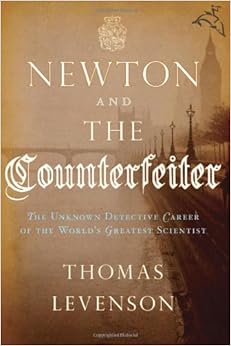
I recall reading a great book on Isaac Newton about his little known career at the Royal Mint trying to outsmart a counterfeiter- it's well worth a read.

Yesterday's Times carried two reports which resonated with that book. One of the reports was concerned with supposedly vintage wine,  at £10,000 a glass, that a 'wine detective' claimed "on some of the bottles that are supposed to be centuries old, the labels were printed by computer", other causes for concern were the corks, label glue and the type of bottles. Had the buyer been victim of a fruad?

The second report was concerned with counterfeit £1 coins - not a million miles away from the problem Newton was trying to crack.

Both the reports remind us of one of the challenges which face procurement: 'how do you know you get what it says on the tin (or specification)?'

I recently spent some time exploring an organisation's vulnerability to procurement fraud. One of the areas of vulnerability was the lack of protection against a specifier colluding with a supplier who priced against a specification but delivered below specification. The problem was aggravated in that many of the materials were concealed in the building fabric and a counterfeit was unlikely to be detected unless there was an acute failure which could have led to lives being lost. Of course the failure could have been through a shorter lifespan and long after the specifier had left the organisation.

Part of the problem was the specifier was the same person who dealt with the RFQs, and signed-off acceptance of the delivery to the specification.

While that's a worst case scenario, the strange thing was that the organisation did not have mechanisms in place to protect the specifier against unfounded allegations of collusion - do you?


Tuesday, 25 March 2014

Do you need to know how much is lost to fraud?

Last night's Panorama programme on 'The Great NHS Robbery' and the related press stories appear to have created quite a stir. The NHS is now criticised for not knowing how much it loses due to fraud even though Full Fact question the very basis of the figures quoted. Naturally, my own interest lay in the passing reference to procurement fraud by Jim Gee, one of the main contributors, and Director of Counter fraud services, BDO LLP and Visiting Professor and Chair of the Centre for Counter fraud studies at University of Portsmouth.

If you don't get a chance to see the programme, the basis appears to be The Financial Cost of Healthcare Fraud 2014 report, said to be the outcome of 15 years research!

Let's first acknowledge that the Panorama programme, the Report and the surrounding media reports have usefully raised awareness that fraud is a big issue and a waste of scarce resources. Let's also acknowledge that fraud is on the increase and the reduction in forensic public sector auditing is unlikely  to hasten a demise of fraudulent activities.

But it is a nonsense for Mr Gee to say the NHS "needed to carry out a proper assessment of how much it was losing" or, as paragraph 1.2 of the report, states:
The measurement of losses to fraud (and error) is an essential first step to successful action. Once the extent of fraud losses is known then they can be treated like any other business cost – something to be reduced and minimised in the best interest of the financial health and stability of the organisation concerned. It becomes possible to go beyond reacting to unforeseen individual instances of fraud and to include plans to pre-empt and minimise fraud losses in business plans.
"Essential"? Why? What purpose would that serve? It is not at all essential to have measurement of fraud before you can treat the causes of fraud and put in place preventative measures. At best, knowing the cost of fraud, helps the business justification for taking preventative steps.

Sunday, 23 March 2014

Allegations of procurement fraud at Police Federation have lessons for all

Confidence in the police is probably at an all time low as a result of Plebgate, behaviour of undercover officers, hidden union bank accounts, Hillsborough, 'stop and search', and the failure to get any form of closure for the Lawrence family. The last thing the 'Peeler's Union' want is more damage to its reputation through a scandal of questionable procurement practices. Yet, 'Fraud squad investigates police union boss over charity deal' screamed out of today's Sunday Times.

Those implicated claim to be innocent yet they will now be paying a high personal price, whether or not the allegations are proved.

There is little doubt there was a lack of good judgement by those concerned. I don't think that lack of good judgement is solely with the specific individuals under investigation, I think a lack of good judgement was exhibited by all those concerned with the oversight of the Federation. They could have stopped the 'questionable' procurement - isn't that what oversight is supposed to include? It is my interpretation of the Bribery Act that they also failed to put in place processes to prevent bribery in procurement - had they done so, there wouldn't have been the opportunity to engage in the 'questionable' activities.

A QC representing the individual under the spotlight, acknowledges that appropriate procedures hadn't been followed. Contracts were rushed through in the absence of competition and awarded to friends who appear to have charged excessive fees. Advice from the charity's lawyer and auditor was ignored. There was also an absence of due diligence in the award.

This is a complete and utter mess yet I think it is far from unique. I believe too many organisations needlessly leave themselves and their staff open to allegations of impropriety, partly believing it will never happen to them, partly through complacency, partly through naivety.

How vulnerable is your organisation? How vulnerable are you?

Wednesday, 26 February 2014

CIPS Ethical Procurement & Supply eLearning & Certificate

I can only give CIPS praise today for the introduction of its Ethical Procurement & Supply eLearning and certificate.

The training covers: eradication of unethical behaviour to the human race, eradicating corruption and exploitation, and, personal conscience, compliance and influence. The content, is bang up to date and well presented.

I spent sometime yesterday completing my employer's compulsory 'Compliance with Governance, Anti-bribery and Corruption Awareness' eLearning and test too. So I half expected the CIPS eLearning to have been a bit easier. However, I found the training, informative, quite demanding and not something I could rush through.

There's quite a nice mix of reinforcing detailed case studies and tests on the way through which give you a warm-up to the final test. On completion of the training, which probably took me in the region of four hours, there's a final test which is no pushover but leads to a Certificate. Perhaps useful as a Personal Objective for all procurement staff.

The eLearning and test is free for CIPS members until October 2014. I'd encourage CIPS to continue to offer the training and test free of charge as part of the overall membership offer but perhaps embed it into membership renewal, otherwise I suspect it will slip off the radar. Nevertheless, an excellent CIPS offer which I recommend.  


Tuesday, 4 February 2014

Don't mention you're in public procurement on your holidays - European Commission Anti-corruption report

The European Commission has just published its report on anti-corruption which aggregates various pieces of research and sadly highlights public procurement under the 'plenty of room for improvement' category.  

Research from 2008 is cited suggesting between 20%-25% of contract price and sometimes as much as 50% (p.21) can be included in some contract costs as a result of corruption. 

Looking across EU, 32% of companies which participated in public procurement said corruption prevented them from winning a contract (p.24). 

Areas of abuse were perceived to be ( p.25): 
  • specifications tailor-made for specific companies (57%), 
  • conflict of interest in bid evaluation (54%), 
  • collusive bidding (52%), 
  • unclear selection or evaluation criteria (51%), 
  • involvement of bidders in the design of specifications (48 %), 
  • abuse of negotiated procedures (47 %), 
  • abuse of emergency grounds to justify the use of non-competitive or fast-track procedure (46%), 
  • amendments to the contract terms after conclusion of the contract (44%).
I don't actually find the areas of perceived abuse remotely surprising but was initially slightly cynical of the research approach, for example, if you give someone a list of areas of abuse and asked them merely to guess were corruption is most prevalent, I think you'd get the same answers.

Yet,

Saturday, 25 January 2014

pCard and corporate credit card procurement

Today's Times included a throwaway comment that "there were signs that restrictions on corporate credit cards had started to loosen". Given that the article was generally referring to bankers, perhaps we should not draw conclusions that this is indicative of a general trend.

Of course we also need to be cautious in reading too much into what is meant by 'the restrictions' - for example, does it mean higher thresholds, wider categories of spend allowed or wider access to corporate credit cards?

Either way, organisations need to remember that corporate credit cards are not a perk or an opportunity for extravagance at the organisations expense. They should fit within the Finance and Procurement Policies and Strategies as a way of reducing transaction costs, and managing Low Value Orders. They also need to be supported by protocols, controls and guidance otherwise you may as well just hand over a wad of cash and tell the profligate to go and enjoy themselves.

Tuesday, 14 January 2014

Suggestions from China on combating construction fraud

It's not often I refer to Chinese authors, indeed I think this is a first. Deng, Wang, Zhang, Huang and Cui have published an interesting paper in the latest issue of Public Money and Management which discusses fraud risk in public construction projects in China.

You may not think that recommendations from China are transferable, yet I have been asked about how to combat construction fraud in a number of countries which really struggle with corruption and fraud in construction procurement - amazingly those asking the questions seem to ask the question in private and expect a one-line, off the cuff answer. The recommendations of the authors may help those facing that challenge so I thought they were worth sharing:

Thursday, 9 January 2014

Horsemeat scandal: a healthy outcome for procurement

I have discussed the horsemeat scandal  on many, many, many occasions but today's 'I' carries a interesting report of calls for a Food Crime Unit as a response to scandal.

Professor Elliot also advocated that food fraud needed to become an item on company risk registers. His view is that:
Any particular incidents of suspected food fraud that are happening should be reported to the board. What we don't want are chief executives saying "I knew nothing about this". 
The call for a Food Crime Unit is interesting but surely inconsistent with traditional Conservative philosophy of interference with markets. But wouldn't a Crime Unit be responding after crimes had been committed, wouldn't it make much more sense to improve the robustness of food quality assurance and supply chain management? Is it really likely that the current coalition would invest in the setting up of such a Unit?

However, Professor Elliot is right about the need for food fraud to be included on company risk registers, but not just when a fraud is suspected but as a risk which has the potential to materialise in the future, is regularly monitored and reported on.

CEO's need to be reassured that effective risk management systems are in place for all procurements and managed at the appropriate level.

If the risk registers of any of the major food retailers had not identified food fraud as a risk prior to 'Horsegate' then there have to be questions asked about competence and negligence. But if food fraud was not on the risk registers, what else has been missed, for example, what about the health and safety of clothing manufacturers?

But having said that, what about the other procurement story today on the MoD's decision invite bids from only two suppliers for Logistics Commodities Service Transformation, it would be fascinating to the mitigation plans on that risk register particularly in the light of the lessons learnt from the failed GOCO procurement.

One thing that Horesegate has highlighted is that food procurement risk management systems failed. The real questions we need answers to are why it failed and what steps are being taken to correct those failures - if it is a basic as including food fraud on risk registers then shame on the industry and we shouldn't be remotely surprised when Horsegate2 arrives.