Showing posts with label vfm. Show all posts

Thursday, 25 May 2017

An Olympian challenge for sustainable procurement and user satisfaction

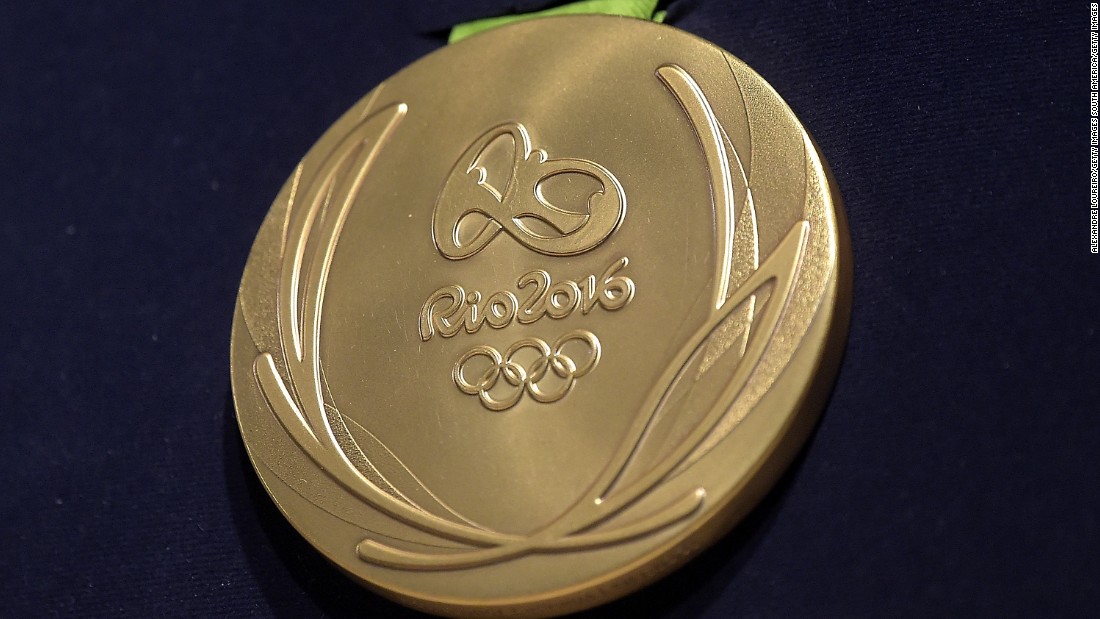
In a drawer beside me I have a suite of NIAAF medals, yes, surprisingly, some years ago I was an international athlete!  The medals have personal memories attached to them; I can remember something of each one of those races even now, over 20 years later.  The medals are also something of a tangible legacy which I have always viewed as worth passing to my children and grandchildren.  When I received them, even though I wouldn't be able to retain my fitness, I never gave a second thought as to whether or not the medals wouldn't be durable.

I never had any illusion of being able to win an Olympic medal but I'm sure those who have done assumed their medals would last the distance.  Now we learn that somewhere in the region of 7% of the Medals awarded at the Rio Olympics are starting to wane. It is somewhat ironic that the medals were celebrated for their sustainability - materials used included recycled silver and industrial waste.

Olympic medals are unlikely to have been included in the high cost/high risk profile but that doesn't mean they shouldn't have been subject to a risk assessment and evaluated on the basis of fitness for purpose. That fitness for purpose should have included something of the users perspective too.  It can only be assumed that evaluation didn't take place or, if it did, wasn't given a great weight. The Rio Olympics procurement has once again become a talking point for all the wrong reasons.  Wouldn't it have been easier to have got it right and managed the reputational risk!

But the damage through this lackluster procurement also casts a shadow over the approach to sustainable procurement - instead of acting as a role model it now will serve as an impediment. Sustainable procurement doesn't need to compromise fitness for purpose and shouldn't.

Perhaps the lessons from this are:

  • Consider the specifications others have used, perhaps through consulting with peers; 
  • Place performance and functionality in the perspective of the user;
  • Consider the risks to functionality in the specification and award criteria;
  • Remember the potential for reputational damage in your risk assessment;
  • Test functionality perhaps in the lab;
  • Don't compromise performance and functionality for the glister of sustainable procurement PR.

Friday, 6 January 2017

Pirates of the Specification

Buying ships shouldn't be such a big deal if you've a legacy of being one of the great naval nations of the world; you'd have had experience of buying ships to cope with the ice of the Antarctic and the dealing with the Pirates of the Caribbean. Therefore, for many it will have come as a surprise that £1bn of warships are breaking down in the Gulf since the water is too warm, leaving crews vulnerable!!!

The contractors claim the MOD didn't tell them about that particular potential usage, even though the UK has been engaged in flighting there since 1990, if I am correct, and in truth we could go back centuries. Have the MOD locked themselves into a strategy which requires a portfolio of ships which can only be used in restricted climates?  If that was the case, the old news stories of warships being redeployed from various parts of the globe to potential conflict areas will be no more, for the simple reason they wouldn't work.

Setting that aside, now it looks as if a refit of these particular Destroyers will be necessary.  

I assume the courts will have to decide who picks up the cost but already it looks as though the contractor is trying to escape liability by resorting to the technical specification set out by the MOD - in other words Rolls Royce complied with the letter of the specification so it's not their fault: 
Are the conditions experienced in the Gulf in line with that specification? No, they’re not. So the equipment is having to operate in far more arduous conditions than were initially required (Tomas Leahy of Rolls Royce).
I assume we will hear eventually if the MOD used a solely technical specification, but this must serve as a warning to all those who do that using a solely technical specification shifts the burden of functionality to the buyer. To me there will always be a basic need for technical specifications but they need to be accompanied with functional and performance specifications; and when a service is involved, outcome specifications.  It certainly looks, at face value, as if the MOD set aside the functional and performance aspects, and, if that is the case, why?

But there's another question here, what about all the talk of supplier partnerships and innovation transfer - was that a one-way street from the MOD to the market without reciprocation? The relationship between the MOD and its strategic partners now looks as if it has suffered a major set-back and will take some time to recover.

To me there is one lesson for all procurement professionals here: never resort solely to a tec spec.

Thursday, 29 December 2016

Barcodes in the NHS - I'm mystified, tell me I'm wrong.

"Barcodes are going to be used in the NHS" has been a headline story on the TV today and in the press.  Now I've had more than my fair share of NHS treatment over the years and I completely support harnessing the potential of barcode use.

I'd also like a barcode to be issued to me the moment I enter the A&E carpark, yes the carpark, and that then tracks how long it takes until I leave with a hopefully a smiley face - shouldn't waiting time be reported from the time I arrive on site, shouldn't there be something which sets aside hospital carparking fees when the cause has been NHS queuing inefficiency?

However, back to the real world, what struck me with the TV coverage of the story was that the practitioners were not emphasising patient tracking, risk management and accountability, but stock control! Stock control?

I am absolutely mystified, that after so many 'cost down' initiatives in the NHS, we are being led to believe that it is only now barcodes are being piloted in stock control. Let's remember barcodes were introduced in the 1970s. The news coverage suggests a pilot NOT a rollout, mind you.

I would really like to be reassured that basic good practice stock control and purchasing, including the use of barcodes, has been practiced for years and that the news coverage is misleading?  I'd like to understand, and have a darn good explanation why barcodes haven't been used and I'd like someone to explain why the potential cost benefits have been missed?  If the news coverage is correct, and barcodes are not widely used, I would like to understand the NHS strategy for Innovation transfer? In fact, could someone explain to me who will give an explantation why the Government's 2008 white paper on innovation doesn't seem to have been performance managed?

Wednesday, 21 December 2016

Why did government and Deloitte agree to 6 months of no bids?

While I can understand the annoyance of #10 over a leaked paper on its approach to managing Brexit, I have struggled all day to understand why the UK Government and Deloitte have agreed to a six-month no bidding period as a consequence - is this not must a lose-lose agreement?

Let's set aside the leaking of the document and whether or not Deloitte had any control over its arrival in The Times, was it a validate assessment of the UKs preparedness? There used to be a hackneyed saying about 'speaking the truth onto power', if the assessment was correct, maybe the government needed to hear.  If the assessment was flawed, why take any action at all?

Then we come to the issue of the six-month separation. The suggestion is that the government may not suffer as a result of Deloitte not bidding. But what if Deloitte had a particularly smart way of answering a problem which the government is faced with over the next six months - aren't the government 'cutting off their nose to spite their face'?  How does that stack up against the pursuit of value for money?

Alternatively, if a bidder, just any bidder, deliberately opted out of bidding and signalled that intention to its competitors, isn't very close to distorting the market.  What if you turned that on its head and the buyer said, "we've removed one of the competition"?

What if the outcome is that the government have trouble getting bidders? Wouldn't that put the government at a disadvantage in trying to get its work done; assuming the work needed done in the first place.

Then again, how would all this agreement to no bidding sit within the EU procurement rules? Assuming the government exerted some pressure on Deloitte to arrive at such an odd settlement, is that remotely compatible with the existing principles of the Market?

So how will this manifest itself over the next six months?  Have Deloitte's voluntarily agreed to a six month blacklisting period during which they will not be invited to bid?  If they are awarded a contract by mistake, will it be set aside? What will the memo to departments setting out the current position say?

Wednesday, 7 December 2016

Trump's Twitter procurement strategy?

Donald Trump has redefined how to use Twitter. Still President Elect, as opposed to President, he appears to have adopted a 'shoot from the hip' approach to policy and announcements. In the UK politicians were criticised from making announcements on TV as opposed to Parliament, but this is of a different order.

One of the stories which dominats the US news today is President Elect, Donald Trump's 'Cancel the order' Tweet.  The order being with Chicago-based Boeing for a new version of Air Force One.  The Tweet is effectively saying "I am going to block this contract as I believe it is no longer a good deal". Now, that will send tidal waves through contractors and those in procurement in US public procurement! What will become the new modus operandi?

Needless to say Trump's estimate of the $4bn is challenged by many. Boeing, it appears, haven't even secured the deal!  Then you've got the reality that the plane is unlikely to be delivered during Trump's residence of the Whitehouse anyway - it will be other Presidents' plane as opposed to his. Transition is taking on a new completion now and for his successor.

Anyway, is Trump ushering in a new style of Twitter usage, a new style of public procurement negotiations, or a new style of procurement strategy?  If other political and business leaders chose to follow his style this will create a very real and present danger for procurement professionals. Trump has built a reputation of saying "You're fired" what's that mean for procurement?

Saturday, 19 November 2016

Approval processes, the Queen and Parliament

I've been giving a lot of thought lately to approval processes for big investments, not just procurement. Part of my thinking has been concerned with how you would define a good approval process and evaluate the 'As-Is' - my early thinking is that it would exhibit the following:
  • Robust governance at the appropriate level;
  • Clarity of who owns and is accountable for the business case;
  • Consistency in application;
  • Visibility and transparency - knowing when a given need is in the process and what's happening;
  • Understood by users;
  • Pragmatism;
  • Integration with the wider eco-system.
How do those attributes sound to you?  What else would you include?

Anyway, news that the The Queen is now seeking approval from parliament for £369m of repairs to one of her homes was timely.  Basically Parliament hold the purse strings and need to approve the cost of the repairs at Buckingham Palace, but the current issue is why, within 12 months, has the estimated cost rose from £150m to £369m for the ten-year refit?  

We are told that last year's estimate "was one of several estimates" and didn't include inflation!  Hold on, what is the current rate of inflation, isn't it just under 1%, over the next ten years will that be radically different?  Of the 'several estimates' received last year, what was the range, and was there some selective presentation of the figures to secure last years approval in principle? It's surprising they didn't blame it on Brexit too.

I think it may be interesting to understand why such an investment is now needed - was there no investment in recent years in preventative maintenance? Is this all reactive?  Surely those managing the Royal Estate should be concerned with preventative maintenance and there shouldn't be a need for such a massive investment?

But let's also remember that this latest discussion is about approval to invest the now £369m. When I discuss an integrated approach in my list of attributes of an approval process, I'm referring to integration with what happens after approval has been granted.  I want to see approvals within stated tolerances and subsequent governance and scrutiny in the contract award and implementation, including project management. Without that Parliament would be buying a promise and abdicating responsibility for ensuing actual value for money is achieved, not just the aspiration.  There's another interesting question here, if you recall Westminster Palace is also in need of a massive refurbishment - is there no strategy for looking across the portfolio and planning accordingly?

Friday, 18 November 2016

Brexit preparedness and armoured vehicles - what's so hard about that for procurement?

Just in case you wondered why I hadn't blogged recently, it is quite straight-forward, I've been very busy on my day job and haven't found much to say or add to the current procurement debates. I've also been really frustrated with obvious lack of preparedness to the Brexit vote - I wrote an article in Public Money and Management in March 2015 which warned:
... there is growing discomfort in many countries with their membership of the EU.  Those working in public procurement policy and practice would do well to consider the 'what if' scenario if the threatened exits from the EU materialize as there would be significant repercussions. (PMM, Vol 35, #2,  March 2015, p.95).
Well the news this week certainly suggests my warnings should have been heeded more widely across the UK public sector.

However, excuse that bit of "I told you so" - what do you make of the story in today's Times: 'MOD accused of sham contest for armoured vehicles contract'?  The gist of the story is that there are insinuations that the MOD is engaging in a procurement process while already having made up its mind what the outcome will be.  Apparently, the "preliminary market engagement" has been worded in such a way as to reduce the options to one, even though, functionally, it would appear there are significantly lower priced alternatives available!  The process is underway at the present and this stage closes on Tuesday coming.

I wonder how the MOD assessed the risk of this procurement exercise? What will happen in the rest of the procurement process?

If it turns out the potential alternative providers chose not to bid, then the media and those bidders will say it was a fix and the tax payer may have lost out - we would never know.  If the competing products don't match the needs of those on the frontline but because of media attention is awarded anyway, the frontline users suffer and also the best provider misses out on their competitive advantage. If the alternative providers do submit the required responses and then subsequently aren't shortlisted, it will be perceived as a fix and a very costly fools errant for the bidders.  If the alleged preferred supplier wins, at what is considered to be an inflated price, there will be questions, perhaps even allegations of corruption.  If the process is scrapped ... I could go on but you get the gist.

This procurement has all the hallmarks of not being a CV enhancer - why on earth can we not think procurement risk and manage it?


Friday, 10 June 2016

Were procurement voices heard at Bristol's European Green Capital?

I'm sure it will have escaped many of you that Bristol was the European Green Capital in 2015. The Times have just revelled some of the £12m of procurement's involved:
  • £37,000 wiring a tree with a sound and light system activated by falling beechnuts, only to discover that it was predictably going to be a lean year for beechnuts; 
  • £49,200 creating an artificial fog over footbridge;
  • £84,000 for life size wicker sculpture of whales;
  • £5,000 for a guest speaker;
  • £3,800 for pies provided to guests at a launch party;
  • £25,00 for a 'happy cities' survey;
  • £6,000 for a circus group;
  • £18,000 for use of 'Shaun the sheep' image on promotional materials;
  • £1,000 a month for a press-cuttings service.
Now let's assume that proper procurement policies were in place and processes complied with - although we know that often 'arms length' bodies feel they are beyond that.  Let's also assume that there was some benchmarking to ensure that the various deals represented good value for money.

The previous Mayor of Bristol claims the year was a "massive success". Unsurprisingly, others don't agree but is that criticism justified? There must have been a strategy for the year and that should have drilled down to the various event components - those responsible for governance had a responsibility to ensure that was scrutinised and justified and not just 'rubber stamped'. It would have been good if that plan had been published and consulted upon as that would have deflected some of the later criticisms.

It would also have been good if the initiative were subjected to an independent outcome assessment - that would have demonstrated the economic and environmental benefits gained - the ratio of cost to benefits.

As with so many of these types of initiatives money was pooled from various big funders: £1m from the City Council to pump-prime, and that brought a further £7m from the government £3m-£4m from the private sector.  I actually know nothing about the governance structure which was put in place, but to me, Bristol City Council probably came out on top. However, I would like to have seen a pro-rata allocation of influence at the governance table based on the funding provided - those funders had real 'skin in the game' and needed to be clear these were procurements they had confidence in as opposed to rubber stamping, of worse, giving without control. I wonder how many procurement voices were heard at that table?

Friday, 3 June 2016

A new twist on Make/Buy for the NHS - how to avoid the latest drugs rip-off?

I was very late getting to today's Times but when I did get round to reading it I was fascinated to find a procurement story dominating the news: "'Extortionate' prices add £260m to the NHS drug bill". I won't try to explain the whole story but in a nutshell it appears there's a loophole in the NHS purchasing policy which has created a 'get rich quick' opening for a few entrepreneurs.  The opportunity is linked with the selling of patents which are bought from the big pharmaceuticals by comparatively small, clever,  opportunistic entrepreneurs, who are then able to harvest excessive profits from the NHS, etc.  For example, here's one price trend provided by The Times:
For more than five years the NHS in England paid pharmacists £3.77 for a 28-pack 25mg tablets and £5.71 for a packet of 50mg tablets. In July 2014, under [one of the firms using the strategy], the price suddenly increased to £24 and £48 a packet respectively. Eight months later both prices doubled. Eight months after that, last November, they almost doubled again, this time rising to £97 fro a 25mg pack and £154 for a 50mg packet.
The Times suggest that this, perfectly legal practice, is costing the NHS an extra £262m a year for over 50 drugs! When NHS budgets have been unsustainable for a few years it seems odd that the Times uncovered this as opposed to the NHS - what's been happening there with benchmarking prices, procurement strategy and category management?

Now, it would be easy to throw stones at the NHS but I wondered what I would recommend if I was involved in NHS procurement. Of course I have no inside knowledge of what is actually going on but I think I would start with:

  1. Exploring why such price increases have been justified and accepted?
  2. Clarifying why the market isn't working effectively?
  3. Ensuring prescribers only name the drugs in question when absolutely no other alternative is available - pharmacists will have a part to play here? 
  4. Exploring the feasibility of a new model of patenting, and agreement to purchase, with the major pharmaceuticals which ensured that the NHS had first refusal on a transfer of some patents?
  5. Establishing why the NHS, WHO or even the EU couldn't intervene and take on role which the entrepreneurs have - clearly the business case evidence is there?
It does strike me this is another variation of the make/buy decision.  Yes, I appreciate that what I'm suggesting may well be contrary to the prevailing political philosophy but when the money is running out of the NHS 'piggy-bank' surely all options need to be explored.

Monday, 1 February 2016

A bizarre approach to procurement of social services in Northern Ireland

Sometimes I hear a news story relating to public procurement and just sit back mystified. Tonight it was announced that the independent social care sector in Northern Ireland will receive a 'no strings attached' £1.6m gift from the public sector, a 2% increase in the rates Trusts pay to private sector providers.

The aspiration is said to be that the increase will help in recruiting staff, yet whether or not the private sector providers decide to use the additional money in that way is entirely their choice.

It is great that the NI Health and Social Care Board have decided to plough more money into care, but let's remember that the care packages offered to families in Northern Ireland are not remotely similar to those offered elsewhere in the UK and, as a result, many families have to cover care costs which they wouldn't have to elsewhere. I suppose you could argue that 2% increase would reduce costs paid to self-funders, but is that the case?

However, if we look at this purely from a procurement perspective:

  • If the objective was to help with recruitment costs, why was the money not made available with the explicit requirement that it would directly flow into staff pay-packets?
  • Then again, why should the money be passed to private sector providers without any regard to the profits being made and retained by the providers? Would it not have been more prudent to consider how each provider currently manages their business?
  • How does this look to other businesses, particularly family run businesses, which have seen a reduction in their own 'take home pay' while trying to avoid pain for their staff?
I'm sure this was a well intentioned initiative, but perhaps it could be better managed.

Saturday, 30 January 2016

Grossly excessive fees?

There was a fascinating story in yesterday's Times  and Mail online on a leading surgeon being referred to the General Medical Council for charging "grossly excessive fees". £12m was charged to a member of the Brunei royal family for breast cancer treatment.

If the report is correct, it begs a number of questions:
  1. Do the GMC have policies on fees?
  2. What constitutes "grossly excessive"?
  3. Is there a difference between "grossly excessive" and "excessive" fees?
  4. What constitutes fair and reasonable fees?
  5. Would the view be different depending on whether or not the treatment was effective?
  6. Does the relative value to the recipient have a bearing on the view?
  7. Did the recipient have the option of an alternative provider?
  8. Is there ever a situation where the surgeon is paid by results?
  9. What's the GMC's view on fees charged to private patients in the UK by comparison to those a surgeon is paid by the NHS for like-for-like treatments?
  10. Should the principle of accountability and unacceptability of charging "grossly excessive" fees be applied to other professions?

Friday, 1 January 2016

A New Year procurement lesson from Rodin and the Honore of Balzac

Some time ago I discussed the story behind one of Rodin's sculptures, the Burghers of Calais, and its relevance to procurement; this time I want to discuss the actual procurement of a different one, namely, the sculpture of Balzac, the novelist who lived from 1799 until 1850.  

Rodin was commissioned by Societe des Gens de Lettres in 1891. Rodin spent seven years on the work, seeking to understand the author's life, arranging for models to pose and actually ordering clothes to Balzac's measurements. He eventually clothed the sculpture in a dressing gown depicting Balzac's dress sense when writing. Worse, Rodin chose to present the sculpture as a persona as opposed to a true likeness. The client was unaware of this intention and when a plaster model was presented to them in 1898 they were furious and refused to pay.

Rodin kept the sculpture but it was not cast in Bronze until 22 years after his death.  (You can now see the finished work and the Burghers of Calais in the Rodin Museum in Paris.)

Few would doubt Rodin's capability and capacity to satisfy the client, that's not where the commission went wrong. So, as we approach the procurements of 2016, the lesson is clear: make sure you specify clearly what you want and any constraints you place on the provider. If your commission can be managed in stages with sign-offs, make sure you set out what those stages are and also how you have the right of exit.

Rodin's sculpture of Balzac was not to everyones taste and indeed neither the buyer nor the seller ended up happy; pity they hadn't given more thought to the procurement process.


Wednesday, 16 December 2015

Santa's procurement hoverboard hell or heaven?

Forget Santa, this could be another bad news day for the procurement profession, given that Amazon have advised customers they should throwaway hoverboards they have purchased due to safety concerns.

Behind the need for refunds will be a calling to account for those who handled the sourcing of the hoverboards and how so many have failed to meet UK, and I assume EU, safety standards. I can visualise the customer helplines of many large retailers being inundated with calls from customers looking for assurances that their hoverboards meet safety standards. Similar calls have probably already been made by CEO's and Marketing Directors!

In those situations Procurement is vulnerable if not culpable. This is an opportunity and a risk for Procurement.
  1. If Procurement were involved but the hoverboards their organisation have on the market are safe, then they need to 'strike while the iron is hot', and get the CEO seizing the opportunity to market the company as a responsible retailer while others have been seen to fail; 
  2. If Procurement were not involved in the sourcing then the case is made for future involvement and the application of procurement risk management tools, including process improvements;
  3. Sadly, if Procurement were involved and the hoverboards now need to be recalled - I hope they believe in Santa too! 

Monday, 16 November 2015

Lessons on the cost of musical chairs at Westminster

Tucked away, understandably, in The Sunday Times was news that "MPs squander £140m on empty office" and typical finger-pointing that "a bunch of muppets" had been involved in this procurement decision!

The story in itself is easily summarised: a lease for 15 years (up until 2029 with no break clause), costing approximately £6m per year, has been taken out on a new office block on Victoria Street, less than half a mile from the Palace of Westminster, while renovations take place at the Palace of Westminster.  The plan had been that the new office would accommodate parliamentary staff currently housed in Millbank, and MPs would move to the former parliamentary staff offices at Millbank. Yet, a year later the offices remain empty and costs of £4m are being incurred for rates and services, allegedly because of fears MPs travelling from Millbank to vote in the House of Commons  could be vulnerable to attack.

(There is no mention of what the decanting costs associated with the musical chairs would have been or why the MPs couldn't move to the new Victoria Street office as opposed to Millbank!)

Now part of the solution appears to be that Department of Health staff move to the new offices, presumably so that the MPs can move to the DoH current HQ.  I assume there has been some risk assessment that suggests the journey up Whitehall is safer that the the journey along Victoria Street.

I certainly recognise, particularly in the light of the barbaric attacks last Friday in Paris, that there is a risk to MPs safety, but is it not true that MPs always have to travel to and from the Palace of Westminster, and also that they spend a lot of time in their constituencies 'out and about', so why is this particular journey so risky and ultimately costly?

There are some interesting questions which procurement could answer, for example:
  1. Why was the contract signed and long before the MPs had agreed to move?
  2. Why is there no 'break clause'?
  3. What was the business justification for securing the new office accommodation so early?
  4. Was there a risk assessment which recognised and mitigated against MPs reluctance to move to Millbank?
  5. Is the contract for the Palace of Westminster renovations already signed and does that contract anticipate a completion date of 2029, allowing for the further decant of MPs back from their temporary locations? 
  6. Is it reasonable to assume that a completion date of 2029 represents good practice - it seems a very long contract for renovations?
  7. What contract management arrangements and contingencies will be put in place for the required complete date?
  8. Prior to signing the lease, were all the relevant stakeholders consulted, including those responsible for MPs security? 
  9. If effective stakeholder consultation took place, are "the muppets" not those who said the MPs journey from Millbank carried a manageable level of risk?
  10. Had the Finance Committee, some of whom now find the contract "completely outrageous", had any scrutiny of the proposals before they were committed to?
The whole thing looks like a remarkable mess, yes, but perhaps it serves as a cautionary example of why procurement needs to be involved in this type of decision, and that a full options appraisal is required and risk assessment, prior to signing a contract.


Wednesday, 11 November 2015

How to minimise the risks of Conflicts of Interests in Clinical Commissioning Groups

It was really only a matter of time until we had some significant exposé on the Clinical Commissioning Groups and Conflicts of Interest. Indeed it is no surprise, since we discussed this very risk many months ago.  Today The Times and BMJ informed us that GPs have awarded at least £2.4bn to their own companies.

I don't think there is much to be gained from revisiting the previous discussion but I think the Department of Health may want to consider their response to The Times and BMJ findings.

There is little mileage in asking for evidence that there was a conflict of interest in the award of the contracts - let's just start with a presumption that there will be. But isn't the real test to be found in whether or not subsequent value for money is delivered? Therefore I would suggest the Department of Health adopt three policies:
  1. Create a benchmarking service which publicly shows the table of rates paid across the various CCGs;
  2. Place an obligation on providers to demonstrate how they provide on-going value for money, not unlike the previous local government Best Value for Money obligations;
  3. Place an obligation on CCGs to publish how they are performance managing their contracts to ensure the required quality of service is maintained, if not improved.
Not rocket science but may help overcome the downsides of Conflict of Interests.

Thursday, 13 August 2015

3 simple lessons when relying on reports

The Kids Co demise has been well documented and some of the lessons for procurement have already been drawn out by Peter Smith, for example, the need for contract management and sufficient reserves. However, today we have learnt that two separate  'independent' reports were cited as evidence of the good work of Kids Co which we can also learn from.

The reports were cited by Kids Co and probably swayed some funders decision making. I would suggest that perhaps funders may well have been naive and that those who based decisions on 'evaluations' need to look much more deeply before being influenced.

The first question worth asking was 'who funded the report'? Well one of the reports was funded by Kids Co and the other appears to have had Kids Co covering the costs. It's not unreasonable to see the potential conflict of interests.

Next, 'what was the purpose of the report'? Neither of these reports appear to have been outcome evaluation reports or indeed value for money reports. One was written by a Professor and leading psychologist who benefited from studying "the language of love". The second focused on the children who used the services of Kids Co.  The reports may well have been fit for purpose but that purpose was not one of commercial due diligence.

Thirdly, 'what was the approach to ensuring rigour'? I could be wrong, but neither of these reports seem to have been subjected to peer review which would have considered the research approach, reliability and validity.

Those three simple tests may have shone the spotlight on the weaknesses of relying on the reports. While it is easy to see the weaknesses we also need to reflect on those same points within a procurement environment, for example, when commissioning reports, when drawing on reports as part of a bid evaluation process, when taking the advice of 'independent' experts particularly in preparation of specifications. Caveat emptor as they say.

Saturday, 18 April 2015

The UK needs to be an intelligent giver (procurer)

Friday's Times reported an investigation into the UK's "scandal of squandered overseas aid".  At the centre of the story is the UK's commitment to spend 0.7% of GDP on overseas aid - now a legal obligation and endorsed by all three of the main political parties.

The issue is not whether or not the UK should be benevolent, or indeed whether we should be more generous, but Dfid's strategy of channelling the aid through multi-national agencies, such as the EU and the UN without retaining sufficient control and scrutiny of the spending. The suggestion is that the UK have outsourced its giving and, in so doing don't have a voice in scrutiny.

We are led to believe that over £6bn a year is contributed through the international agencies, 60% of the total amount, and that £6bn is not subject to UK oversight.

The giving of this £6bn is actually a procurement - the UK pay out some money in the anticipation of a delivery. Giving through the international agencies does not shackle the hands of the UK in terms of exercising its control. On the contrary the aggregation of the UKs aid with that of other countries should lead to a more strategic approach and more effective targeting. As one of the biggest 'givers', or should we say procurers, the UK is in a stronger negotiating position in demanding reforms and evidence of impact. Demanding reforms and evidence of impact is just good stewardship.

The incoming UK Government need to bring a new assertiveness to the aid strategy. They need to recognise that this is procurement. They need to develop a negotiating strategy. They need to have their own objectives which ring-fence how aid will be spend through the international agencies and they they to significantly improve accountability and performance management. Where that approach is resisted the UK shouldn't withdraw aid but instead redirect through channels where the required level of accountability will be satisfied. That would deliver the required value for money, accountability and improved impact.

Thursday, 29 January 2015

The impact of belief in value for money

Today's Times includes an interesting report on how perception of a more expensive product influences outcome. The report is based on research published in the American Journal 'Neurology'. In an experiment a group of twelve Parkinson's disease sufferers were given two placebos and told one was more expensive - they were told one cost $110 and the other $1,500. Remarkably those given the perceived to be more expensive placebo actually had a 28% improvement in motor skills compared with those on the same placebo yet perceived to be less expensive!

The researchers think the 'expectation of reward response' may have had an impact on the outcome - interestingly eight of the twelve particiants said that they had greater expectations from the more expensive (placebo) drug.

How often do we hear specifiers refer to evidence of better performance from in a procurement process - could that evidence be based on 'expectation of reward response' or rose tinted spectacles?

t would be interesting to know the impact on an evaluation if evaluation panels were given pricing information which implied higher quality?

Of course it would be unethical and unacheivavble within the Regulations, but what would be the perception of users if they were told a public sector organisation had opted to provide a more expensive solution based on citizen preferences?


Tuesday, 15 July 2014

Talking rubbish

I've just returned from a great holiday but whether for good or bad had no internet, therefore no news and no blogs. Hopefully I will be able to share with you some of my holiday observations though over the coming weeks.

Today's news in The Times that 'Councils waste £200m on rubbish bins of all colours' naturally caught my eye. The headline was supposedly based on a report 'Wasted Opportunities' by the Circular Economy Task Force. Too bad the report doesn't provide the evidence to back such a claim up.

But The Times write-up also quotes one of the Report authors, Dustin Benton, who said that "analysis of 40 councils' policies on procuring wheelie bins showed that only two had co-operated on purchasing".  Surely the assumption that councils waste £200m is not based on such a small sample, or was it based on muliplying a potential saving in one council by the number of councils in the UK - sadly we aren't told.

It is also surprising that Dustin (Bin) expected find the answers as to how councils procure wheelie bins through a review of policies on wheelie bin procurement - I have never seen such a policy but have seen the evidence of many councils making use of consortium buying for bins. Why didn't the author ask the question of the local government consortia: "how many councils buy their wheelie bins through your arrangements?"

So yet again council procurement is presented as incompetent - shame that more reliable evidence or a defence wasn't presented.

Saturday, 21 June 2014

Plot gets thicker on police procurement

On Tuesday I discussed potential procurement corruption in the award of a contract for vehicles with the Police Service of Northern Ireland.  Now it looks as though the investigation has been extended to another contract and spread and led to the suspension of West Yorkshire"s Chief Constable

Those leading the investigation need to recognise that the reputation of the police in the UK is at the present quite low. They also need to avoid falling into the trap of not being seen to be doing the right thing or providing an easy exit for those implicated.

However, if it is subsequently established that there has been procurement bribery, fraud and corruption, it will be most unlikely that it will be isolated to just vehicle contracts.  The investigation will need to review:

  1. The procurement governance structure;
  2. Which other areas of spend the culprits have been involved with and how vulnerable those areas were to abuse;
  3. Which other public sector organisations have been supplied by the supplier/s involved - it is unlikely that the supplier only found one area of vulnerability;
  4. Consider the history of dealing with the supplier/s involved and how long the abuse has been going on;
  5. Which other police forces, and indeed public sector organisations, may have been following the same 'failed' preventative systems;
  6. etc..
There also needs to be a due diligence of the procurement processes to establish vulnerability to procurement fraud, bribery and corruption. The Bribery Act requires organisations to put in place processes to prevent bribery anyway.

But if it is subsequently proved that contracts have been wrongly awarded as a result of corruption other relevant issues may arise. For example, 
  1. Assuming the contracts were awarded through the Public Contracts Regulations, surely there must have been a breach of those laws?
  2. What about the suppliers who would have been awarded the contracts had there not been corruption? Would those potential suppliers not be entitled to compensation for loss of profits? That would open a major can of worms as all those award evaluations would potentially be exposed to scrutiny and who knows how robust they would have been.
What will the next instalment be?