Showing posts with label prisons. Show all posts

Monday, 12 September 2016

When contract management meets prisons management.

In the face of an obvious procurement performance management crisis in UK prisons, the Prisons Minister has stated "We have robust processes in place to closely monitor and manage the performance of all contractors".  It therefore seems strange that a £200m maintenance contract has been able to take on the appearance of not being managed and it was only when prison officers refused to accept inmates, some repairs made within hours!

Robust contract management process need to be more than just a written procedure, they need to be embedded as a way of working.

To make that happen the contract needs to have explicit standards and a specification of what represents acceptable performance - it is agreement between the provider and client of what they are exchanging. Is that explicit in the prison's maintenance contract?  That statement should have been based on a risk assessment and understanding of the 'front line' - were front line staff involved in defining the standards?

There also needs to be a cascading of the contract documentation down to those who are in a position to know, on the ground, what acceptable performance means. There is little point in a contractor being criticised for poor delivery if they are actually matching what they were asked to price, that could include, for example, schedules of which repairs need to be completed within particular timescales - again risk based.  While Carillion, in this particular case, are being criticised, is the specification part of the contract actually robust?

A contract management structure needs to support the process which sets out who monitors what and the escalation approach. It also needs to have a process where and when client/contractor liaison meetings take place.  Either this was not in place or it has failed drastically for the Prisons Minister to now be meeting with Carillion's senior management to set out the improvements required.

But the Prisons Minister also needs more that a list of defaults to wave in front of Carillion, he needs to have a very clear plan of what he is going to do if Carillion don't make the improvements. Can he terminate the contract and find someone else, for example? If he makes a threat at this stage and then doesn't follow through, he'll be looking for his own 'get out of jail' card.



Wednesday, 15 May 2013

On the high cost of contracting security

In 2008 an Aboriginal elder was 'cooked to death' while being transported to prison by a security contractor (the picture is of the van in which he died). I'm sure there was an in-depth investigation carried out by the Australian equivalent of the MoJ as to why a citizen was subjected to one of the most horrific deaths imaginable by one of their contractors. It was a high profile case and one assumes lessons were learnt.

However, now we have learnt of the death of Jimmy Mubenga, while being transported from the UK by the same company, under what appears to be a contract with the UK Borders Agency.  The inquest is till underway but there will be lessons worth considering for all those involved in contracting private security.

From a distance public procurers have been able to talk about the horrors of the Dhaka disaster and the perils of low price sourcing. Jimmy Mubenga's death causes us to look more closely at our own sourcing responsibilities.

Thursday, 9 May 2013

Reducing crime doesn't pay if you're paid by on the basis of demand

Not everyone gains from reduced crime. When you've contracted to deliver a service, and the service is linked to prison 'heads on the beds' you're in trouble if crime reduces.

That's the painful lesson G4S have learnt in The Netherlands, which has seen a reduction in prison occupancy rates from 14,100 in 2005 to an anticipated, below 9,000 in 2015. 30 prisons close so there is less demand for the contracted G4S prison officers. Reduced demand for contracted prison officers, for G4S, leads to the need to issue a warning over profit margins. Anticipated deduced profit margins led to a 15% fall in share price. Reduced profits and share price leads to a potential change in financial stability. Reduced financial stability of a key contractor should lead to a reassessment of procurement risk.

This should serve as a reminder to those involved in procuring services of the need to be conscious of:
  • The need to align contractor incentives with those of the procuring organisation;
  • The need to recognise that demand goes up and down;
  • The need to design contracts which can flex for demand;
  • The need to carry out market scanning and understand the potential impact of external changes.

Wednesday, 1 May 2013

A uniform approach to justice and wasting money

There's something a bit strange going on when departments are wrestling with spending cuts and how to make them, yet a parallel discussion which says "let's spend more".

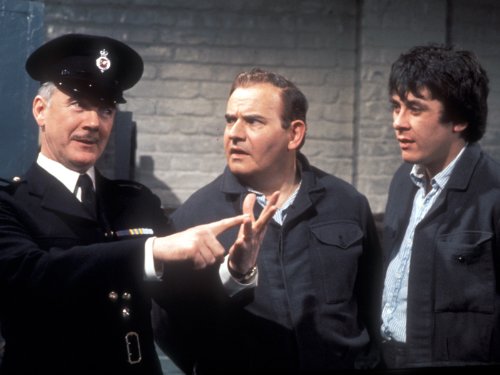
That's what looks set to be announced next Tuesday when it is decreed that all new prisoners will have to wear prison uniforms for the first two weeks of their 'Porridge'.

While there appear to be a reduction in prisoner privileges there do not appear any means of reducing the fixed costs, therefore the gyms and fancy TV's will still have to be paid for, but a new additional cost of uniforms will have to be added. Previously prisoners carried the cost of their own clothes, now it will be the public purse. I wonder has some costed this change and carried out a cost benefit analysis.

Thinking of the risks:

  1. What will happen if all prisoners see this as an opportunity to protest and request that the public pay for clothing beyond the two weeks as an act of protest? How much will that cost?
  2. How do you define 'a uniform', is it actually two uniforms (a prisoner could not be expected to wear the same clothes for two weeks?), complete with shoes, socks, etc?
  3. What will happen when prisoners demand the right to be consulted on the uniforms?
  4. What will happen if this goes to public tender and is won by a clothing provider in say Bangladesh? How will the public sector protect against the low cost manufacturing risks?