Monday, 28 April 2014

Procurement Tsar for NHS

The Health Secretary has announced the NHS will have its own Procurement Tsar. The Tsar will be responsible for a new 'central list' of hundreds of items, harnessing the purchasing power of the NHS - those of you with reasonable short-term memories will recognise that is not a million miles away from what PASA created and it seems to echo some of what the Crown Commercial Services aim to do too.

Will the Procurement Tsar report to the Health Secretary or Francis Maude?

We all know that the problem is not setting up 'central lists' but in changing the culture so that the lists have the ownership of users, particularly clinicians. I'm not clear who the Tsar will be, but they will need to have remarkable influence, change management expertise, leadership and tenacity. Will they also need to have procurement expertise or will they merely act as champions?

Will the Health Secretary act as the primary champion of the change and the Tsar take on the role of 'enforcer'?  I don't think we've had such a Tsar in the past and it will be interesting to observe, not only who is appointed, but the strategy they adopt - will it be a carrot or a stick?

Of course the Tsar could claim an easy victory if they chose their battles with adminsitrators as opposed to clinicians. A 'central list' which includes toilet rolls, reams of paper, printers, laptops, water coolers, etc., would still be a 'central list' but the Tsar will need to demonstrate success in the areas which have been most resistant to change over the last 20 years otherwise they can expect a short life and difficulties in justifying their own value for money.

If they are successful we can expect a new model for public procurement - I wonder will they need the CIPS Licence too?

Saturday, 26 April 2014

Moral hazard, counterfeits and procurement

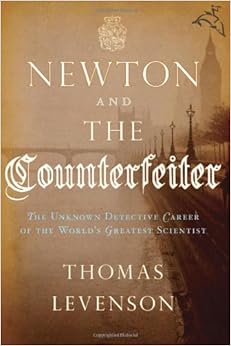
I recall reading a great book on Isaac Newton about his little known career at the Royal Mint trying to outsmart a counterfeiter- it's well worth a read.

Yesterday's Times carried two reports which resonated with that book. One of the reports was concerned with supposedly vintage wine,  at £10,000 a glass, that a 'wine detective' claimed "on some of the bottles that are supposed to be centuries old, the labels were printed by computer", other causes for concern were the corks, label glue and the type of bottles. Had the buyer been victim of a fruad?

The second report was concerned with counterfeit £1 coins - not a million miles away from the problem Newton was trying to crack.

Both the reports remind us of one of the challenges which face procurement: 'how do you know you get what it says on the tin (or specification)?'

I recently spent some time exploring an organisation's vulnerability to procurement fraud. One of the areas of vulnerability was the lack of protection against a specifier colluding with a supplier who priced against a specification but delivered below specification. The problem was aggravated in that many of the materials were concealed in the building fabric and a counterfeit was unlikely to be detected unless there was an acute failure which could have led to lives being lost. Of course the failure could have been through a shorter lifespan and long after the specifier had left the organisation.

Part of the problem was the specifier was the same person who dealt with the RFQs, and signed-off acceptance of the delivery to the specification.

While that's a worst case scenario, the strange thing was that the organisation did not have mechanisms in place to protect the specifier against unfounded allegations of collusion - do you?


Tuesday, 22 April 2014

A very political procurement

In 2012 I published a paper on International Lessons on Austerity Strategy - one of the key lessons being the  advantages of having projects 'shovel ready' so that you could deploy procurement to stimulate the economy and accelerate the recovery. That meant planning approvals gained and availability of construction resources 'ready to go'.

If you did that you could reduce unemployment and the human trauma which accompany it, you could also shift from paying benefits to receiving tax and national insurance income.

Today we learn that more than 200 projects are being announced to rebuild Britain - all to start during 2014/15. Some would scream "why weren't these measures taken much earlier to prevent the flooding and now dangerous condition of our roads?".

Of course the cynic could also say this investment is political - designed to create jobs and have a visible impact of 'something happening' in the run up to the election.

The spotlight now moves to the procurement, project management and risk management of over 200 major projects. If the procurement is successful the next election will see a celebration of successful delivery of improvement public services, local economic development and jobs. If the procurement is unsuccessful the spotlight can be expected to be on procurement blame.

Perhaps it is timely that Locke has just been released!

I have absolutely no understanding of the preparations prior to this announcement but it will be a significant test for the Major Projects Authority too. I assume that someone has checked the capacity to deliver on what could become a very political procurement.

Saturday, 12 April 2014

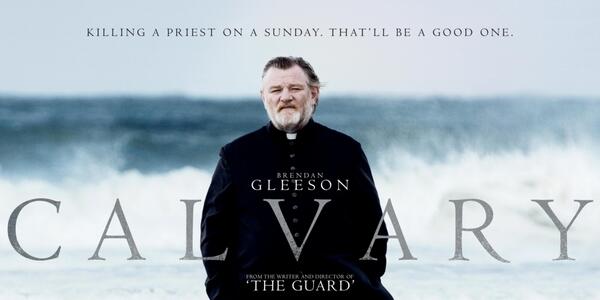
Calvary - film review

Went to see Calvary tonight with Breandan Gleeson centre stage. I would have rated In Bruges and The Guard among my favourite films - now Calvary makes that a trilogy.

There is a trend with that trilogy of Gleeson films but if I shared that with you, I suspect it would be your loss - you'll know when you see it.

While In Bruges could have been released by the Belgian Tourist Board, I'm not so sure that Calvary and The Guard would have the same impact. Yet, you certainly get a feel for Sligo on the West of Ireland - reminded my why I like Sligo so much.

This is really a powerful film. I found it's impact more powerful than 12 Years a Slave and the audience seemed to leave both with the same sense. I honestly don't know why there's a suggestion that this is a comedy - it's not although there are a few bits which could be straight out of Father Ted.

I can't help feel that the timing of the release on the run up to Easter was deliberate. Certainly, it gets my recommendation as a 'must see'.

Friday, 11 April 2014

Thursday, 10 April 2014

One more time: get the procurement processes right and stick to them.

You may well be familiar with the old hymn 'Tell me the old, old story' - it strikes me there is a procurement version: 'Get the procurement processes right and then stick to them'. Time and again we find those basics just aren't adhered to, yet we hear grandiose ideas of procurement being really strategic - are there parallel universes?

Perhaps operational procurement is forgotten and the cry is that the processes must be wrong - if the processes are wrong, fix them, don't avoid them. Broken processes and worse, unadhered to processes have no place in either efficiency, value for money or competitiveness. They also create the environment for procurement fraud, bribery and corruption.

So let's think about some of the basics which Larne Borough Council, like some many, have got wrong and no doubt will be echoed elsewhere shortly:

  1. If you enter into an agreement - get it signed asap;
  2. If you have awarded a franchise, particularly in times when firms are going bust, invoice and get payments regularly;
  3. If you are using corporate credit cards or pCards make sure you manage them responsibly;
  4. Understand what good processes are, adapt appropriately and adopt them, then consistency stick to them.
In this age of 'transparency' it would be nice to see the full report on Larne Borough Council which is said to also express concerns on the award of contracts. 

Those unaware of the Northern Ireland local government may not realise that there is a restructuring of councils taking place, while there are currently 26 councils, there will soon only be 11. The restructuring provides a wonderful opportunity for procurement transformation, not only strategically but in terms of processes - it provides an opportunity for NI to become an exemplar. But if you want to get the processes right, it makes sense to understand the lessons from past failures - that can't happen when reports for investigations remain hidden. Let's hope that the Larne 'hidden' report is the last we hear of inferior local government procurement performance - what are the odds? 

Tuesday, 8 April 2014

Was there even a contract for the water for Sheffield Half Marathon?

On Sunday I discussed the Sheffield Marathon mess. Today we've seen a new twist with the supplier claiming that they did not make the delivery as the organisers had not fulfilled their part of the deal by paying in advance.

In a statement, the water provider said: 

After amending their requirements a number of times they did indeed place an order on 21 March accepting our offer, the terms of which, as always, clearly state that full payment is required in advance of delivery.
It is that payment that confirms the contract and triggers our process of scheduling the assets for delivery.
In the absence of that payment, despite our reminding them of the need to pay, the scheduling did not occur.
There are a few interesting aspects of this statement:

  1. When was the contract established between the buyer and the seller? If the supplier is correct there was no contract at all, but when the supplier says the offer was accepted on 21 March, would that have formed the contract?
  2. What happened in previous years? Was there a history of paying in advance or was this a change in the way of doing business?
  3. Did the buyer even read the Terms set out in the documentation?
  4. Why did the buyer not respond to the reminders for payment from the seller? 
  5. Regardless of how weak the procurement may have been, what type of supplier would knowingly put a race in jeopardy and runners health at risk through none supply of water? Not one concerned with reputation and partnership!
This bizarre competition has all the hallmarks of no-winners but certainly we can learn lessons from what the legal eagles decide on formation of a contract and, at the very least, the need to read the small print.