Showing posts with label design contests. Show all posts

Friday, 1 January 2016

A New Year procurement lesson from Rodin and the Honore of Balzac

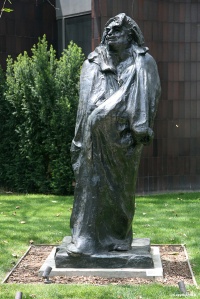
Some time ago I discussed the story behind one of Rodin's sculptures, the Burghers of Calais, and its relevance to procurement; this time I want to discuss the actual procurement of a different one, namely, the sculpture of Balzac, the novelist who lived from 1799 until 1850.  

Rodin was commissioned by Societe des Gens de Lettres in 1891. Rodin spent seven years on the work, seeking to understand the author's life, arranging for models to pose and actually ordering clothes to Balzac's measurements. He eventually clothed the sculpture in a dressing gown depicting Balzac's dress sense when writing. Worse, Rodin chose to present the sculpture as a persona as opposed to a true likeness. The client was unaware of this intention and when a plaster model was presented to them in 1898 they were furious and refused to pay.

Rodin kept the sculpture but it was not cast in Bronze until 22 years after his death.  (You can now see the finished work and the Burghers of Calais in the Rodin Museum in Paris.)

Few would doubt Rodin's capability and capacity to satisfy the client, that's not where the commission went wrong. So, as we approach the procurements of 2016, the lesson is clear: make sure you specify clearly what you want and any constraints you place on the provider. If your commission can be managed in stages with sign-offs, make sure you set out what those stages are and also how you have the right of exit.

Rodin's sculpture of Balzac was not to everyones taste and indeed neither the buyer nor the seller ended up happy; pity they hadn't given more thought to the procurement process.


Monday, 29 April 2013

Political procurement brohaha in Glasgow

Only days after celebrating some of the best in UK public procurement we are brought down to earth
with a jolt, reminding us that all is not as good as it could.

One of the benefits of local government procurement is the centrality of political leadership in the decision-making and councillors personal accountability to the electorate, through the ballot box, for their stewardship of the public purse. But there is a fine and delicate line which delineates when public and councillors should be involved in procurement, and when they shouldn't. Getting it wrong jeopardises public confidence in the system while getting it right enhances public confidence. So councillors and their advisers need to get the balance right.

Of course design contests as part of procurement invariably add an element of subjectivity to the whole process too. It's not easy to prove you've made the right decision.

Then, particularly in an age of austerity, there are questions as to whether spending £15m on a project represents what the public want or when a cheaper option, of say £500k, makes more sense?

With all those ingredients, this Glasgow case is particularly interesting and should provide lessons for all involved in public procurement.

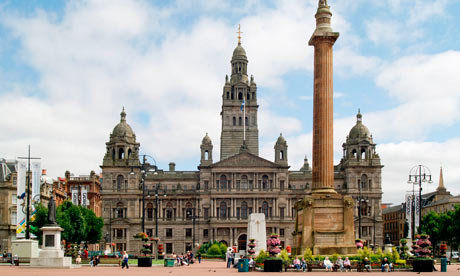
A design contest was held for a £15m  revamp of George Square. Six designs were received along with a public protest to the effect that the work should not go ahead and a cheaper alternative option, at £500k, be pursued instead. A decision was taken to drop the project and pursue the cheaper option. The council Leader was praised for that decision although questions were asked why there hadn't been sufficient public consultation earlier. Then the RIAS complained that the Leader had compromised the process and had showed bias towards a particular design. Now the Leader, Councillor Mattheson is allegedly being investigated by the Police Major Crimes and Public Protection unit. Ironically, the Leader had previously said:  "... I'm sure whichever design team is chosen, Glaswegians will have a George Square to be proud of again".

So, at this stage, what are the lessons:
  1. Define clearly the role of the public, councillors and officers in any procurement process;
  2. Make effective use of scrutiny and gateway reviews in the process;
  3. Carry out an appropriate needs assessment and establish what the public want;
  4. Avoid costly procurement exercises for both bidders and buyers until you have completed a full options appraisal process.

N.B I've a paper published on the role of councillors in the Journal of Public Procurement - let me know if you want a copy.

PS on the 27 September George Matheson was cleared of any misconduct