Tuesday, 30 April 2013

Make or buy train sets

There was a time when every boy (or perhaps his father) wanted his own train set. I had one but it was a torture putting it up, trying to get it to work and then putting it away. I never really found  enjoyment watching a train going round and around and around in circles.

Perhaps the joy was in gaining ownership or putting things together which worked. But imagine the joy which must come if you're a train enthusiast and able to tinker with a real train, not just any train, but the 'big daddy' of them all, 'The Flying Scotsman'.

Perhaps the opportunity to own and tinker with the real 'Flying Scotsman' was just too much a temptation for the National Railway Museum.

Anyway, in 2004 the museum bought the real thing for £2.3m. Then, in 2005 they recognised the need for repairs, which they estimated would take one year and cost £250k. Now, in 2013, the repair work has cost, not £250k but £2.89m. That, in turn, has diverted funds from other areas, and indeed from the wider public purse. The hope is that the 'Flying Scotsman' will be operational in 2015 - that's quite a delay for what was a record breaking locomotive. As part of that journey it is now thought a decision will be taken on whether or not to 'buy' the remaining repair work.

Recently I applauded Liverpool on its decision to call a halt to a procurement which wasn't going to be delivered on time or budget. While I congratulate the National Railway Museum in questioning whether they should outsource the repair work, answers should be sought why a red line hadn't been drawn earlier, why the total costs of repair hadn't been better estimated in 2004, and why a robust 'make/buy' options appraisal wasn't carried out in 2005 regarding the repairs? It would also be useful to make sure that the current make/buy appraisal is robust and risk assessed. Have wider social objectives also been considered, for example, using the repair work as a training scheme or even using volunteer enthusiasts as potential repairers?

But I wonder when make/buy decisions are made, if there is a wider issue - could there be innate bias within our DNA which leads a buyer towards 'buy' and a techie towards 'make'?

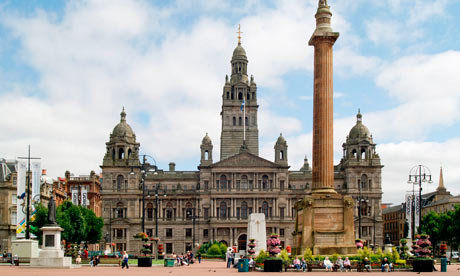
Setting that aside, ironically, the 'Flying Scotsman' saga has some resonance with yesterday's blog on Glasgow's George Square revamp. There too a timely options appraisal was absent.

Perhaps there's an even bigger issue though, namely, are procurement specialists even involved in these decisions early enough to make a difference or at all?

Monday, 29 April 2013

Political procurement brohaha in Glasgow

Only days after celebrating some of the best in UK public procurement we are brought down to earth
with a jolt, reminding us that all is not as good as it could.

One of the benefits of local government procurement is the centrality of political leadership in the decision-making and councillors personal accountability to the electorate, through the ballot box, for their stewardship of the public purse. But there is a fine and delicate line which delineates when public and councillors should be involved in procurement, and when they shouldn't. Getting it wrong jeopardises public confidence in the system while getting it right enhances public confidence. So councillors and their advisers need to get the balance right.

Of course design contests as part of procurement invariably add an element of subjectivity to the whole process too. It's not easy to prove you've made the right decision.

Then, particularly in an age of austerity, there are questions as to whether spending £15m on a project represents what the public want or when a cheaper option, of say £500k, makes more sense?

With all those ingredients, this Glasgow case is particularly interesting and should provide lessons for all involved in public procurement.

A design contest was held for a £15m  revamp of George Square. Six designs were received along with a public protest to the effect that the work should not go ahead and a cheaper alternative option, at £500k, be pursued instead. A decision was taken to drop the project and pursue the cheaper option. The council Leader was praised for that decision although questions were asked why there hadn't been sufficient public consultation earlier. Then the RIAS complained that the Leader had compromised the process and had showed bias towards a particular design. Now the Leader, Councillor Mattheson is allegedly being investigated by the Police Major Crimes and Public Protection unit. Ironically, the Leader had previously said:  "... I'm sure whichever design team is chosen, Glaswegians will have a George Square to be proud of again".

So, at this stage, what are the lessons:
  1. Define clearly the role of the public, councillors and officers in any procurement process;
  2. Make effective use of scrutiny and gateway reviews in the process;
  3. Carry out an appropriate needs assessment and establish what the public want;
  4. Avoid costly procurement exercises for both bidders and buyers until you have completed a full options appraisal process.

N.B I've a paper published on the role of councillors in the Journal of Public Procurement - let me know if you want a copy.

PS on the 27 September George Matheson was cleared of any misconduct


Saturday, 27 April 2013

What will Fallon do, what can he do?

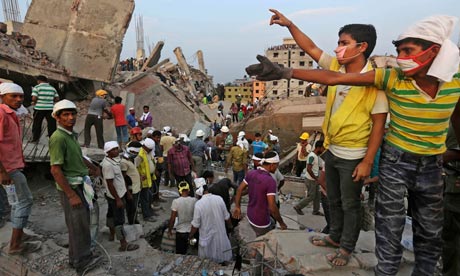
'Any Questions' is a great programme on Radio 4. The episode on 26 April (repeated on 27 April) (specifically the section at 11 minutes) was all the more interesting since the panelists were discussing procurement in the context of the Dhaka factory collapse which I discussed earlier today.

Michael Fallon MP, currently, Minister of State for Business and Enterprise, gave an interesting undertaking "that [UK Government] will look at what responsibility can be put on retailers". When pressed, the only clarification he gave as to what that meant was "we'll look at the various codes that they're signing up to and see whether they are sufficiently transparent and whether enough retailers in this country are actually signed up to them and whether there are significant gaps".

Another panelist, Sir Ming Campbell, suggested accurate labelling may be part of the solution, yet we know 'accurate labelling' didn't protect against 'horse meat in the UK food supply chain'.

We also know that the government have not been able to effectively mandate their own spending departments to use centrally set up contracts.

Yet bizarrely Stephen Kelly, in his evidence to PASC, was implying the public sector should look to retail as exemplars!

So what will Fallon do, or more specifically, what can Fallon do?

He can hardly tell those who have just had their benefits cut to buy more expensively.

However, given that it is alleged it was only the need to meet buyer deadlines that caused the workers to be in the factory on Wednesday in spite of the obvious risks, perhaps he could ask UK retailers to demonstrate that they were not culpable through placing undue pressure on supply chains. Could he initiate legislation which would bring about a new criminal offence of supply chain culpable negligence which may well help strengthen political relations? Or could he have the issue addressed through the G20?  I suppose it all depends on whether there's a will!

The voice of the buyer and the voice of the worker

Compare and contrast the following "Save us brother, I beg you brother. I want to live. It's so painful here. I have two little children" said Abdul Hossain while the buyer said "[we are] shocked and deeply saddened".

One is the voice of a victim, Abdul Hossain, who was dead before 6am yesterday.and one is the voice of the buyer who also said it wasn't aware of any problems relating to the structure of the building which collapsed killing in the region of 360 people. Mango, Matalan, Bonmarche, and Primark are among the buyers.

Like all of its international suppliers, one of the buyers claimed, the supplier had been subjected to regular checks on health and saftey, working hours and overtime. The buyer knew that while "there are building regulations in place in Bangladesh but nobody enforces them".

On Tuesday a crack was identified in the wall and the bank staff, who work in the same building, were told not to come into work on the Wednesday. However, factory managers, under the pressure of buyer deadlines, told their workers to work. On the Wednesday many of the factory workers paid a high price for the need to meet the buyer deadlines when the building collapsed.

64 workers in the same town were killed in a similar incident in 2005.

When you look at it like that maybe it's time for a redefinition of procurement risk management and responsible procurement.


Friday, 26 April 2013

Time to celebrate excellence in procurement

I'm as guilty as the next person of highlighting the omnishambles we frequently see in public procurement. That unfortunately feeds the lie which says incompetence reigns. But last night's GO Awards was the antidote - there we celebrated excellence. We also celebrated impact, innovation and the ability to implement effective change. Yes, example after example after example of excellence in procurement regardless of which sector you come from.

We celebrated the work of the NHS Blood and Transplant collaboration who conceived and put in place a collaboration across Europe between disperate organisations. Standardising specifications, standardising blood collection, sharing inventory, reducing bureaucracy, sharing resources, and, yes, saving doshFrom a personal point of view it was great to see my old classmate Eugene Cooke up there on the platform - I'm sure our MSc lecturer would have been proud of seeing the theory being stretched and applied.

But you don't have to be big to be great as Fabrick Housing demonstrated. if the team were any smaller they couldn't even fit the traditional definition of team. Yet, from a standing start they had reduced the supplier base by 8%, reduced the number of non-contract suppliers to 39% (that was an improvement of 25%), reduced the number of invoices by 21% while increasing the average invoice value by 33% and the average spend per supplier by 65%.To me this was exemplary - a vision, a passion, a plan and delivery.

Of course one of the things which makes public procurement different is that it makes a difference to people's lives. I don't think anyone in the room wouldn't have been moved by the two young people who joined the acceptance speech of the Children's Commissioning Care Consortium Cymru. Two people who's lives had been changed through excellence in procurement - that's some testimony for procurement.

But there was something else worth celebrating last night - public procurement professionals can enjoy themselves. They were helped by the comedian Rod Woodward. I particularly liked his story about the concerns in his Welsh Village when the film 'Babe' was released - I'll not spoil the joke for you when you hear it on the tele but the gist of it was 'naming and shaming'.

Naming and shaming was not what the GO Awards were about - they were about naming and proclaiming excellence in public procurement. That's something worth celebrating.


Wednesday, 24 April 2013

Scepticism is a procurement virtue

We all hold up Harvard, home of the HBR, as having a reliable voice worth listening to. That's where Michael Porter's 5 Forces, value chain and so much of procurement's basic academic theory derives from.  Yet we have now discovered that two of its esteemed professors, who influenced UK austerity strategy, got it wrong in their research. Fortunatelty one of student, Thomas Herndon, a PhD candidate (pictured), had the sense to question their data.

There is a not insignificant problem though in that the Chancellor may relied on Reinhart and Rogoff's flawed evidence which told him what he wanted to hear about austerity strategy, even though it has now been proved wrong.  But Osborne is not alone in being gullible.

We have also learnt that a key influencer in childcare policy was feted yet without much testing of his credentials.

Then we have the health nightmare unfolding in Wales as a result of the nonsense propagated by the now discredited Dr Andrew Wakefield over the dangers of MMR vaccinations. Many of the population, including the Lancet proved gullible.

That's not to mention the £50m spent on fake bomb detectors.

Is there not something which suggests that when you get someone who is coming up with a 'flat earth theory' you maybe should test a bit more, after all is that not what the scientific method is all about. The   student who have the bravery and tenacity to challenge the findings of the two Harvard professors was not welcomed with open arms but has been proved right.

As procurement professionals perhaps we also need to be bravery, more tenacious and sceptical.

Two examples of what I mean in terms of procurement: I recently critiqued a bid and found 25 assumptions stated by the bidder - when the buying organisation were challenged on the assumptions I found that raised a hare in terms of readiness to accept the bid without being contractually open to additional costs and risks. Secondly, some 20 years ago, I was asked to review a recommendation for a tender award a few hours before it was to be recommended to councillors for acceptance. I received many cynical looks when I strayed beyond my 'look at the process' remit and revealed that the 'numbers just didn't add up'. Of course the "specialist consultants couldn't be wrong" - well actually, sorry, they were wrong.

We should use the low risk option of questioning validity in procurement more often - all we need is to be more sceptical and recognise that scepticism can really add value.

So, why is it so difficult to be a sceptic? Isn't scepticism a procurement virtue?  

Jeremy Hunt's recommendations for procurement improvement

On the 26 March the Heath Secretary outlined his response to the Francis Report; the investigation into healthcare failings at Mid Staffs. I have been watching some of the NHS discussions and, in parallel, following the Public Administration Select Committee (PASC) Inquiry into Public Procurement. As I listened to the discussions on the Francis Report I had a vision of Bernard Jenkin (Chair of PASC) having had coffee with the Health Secretary and each accidentally leaving with the others papers. Just to clarify, I wondered what would have happened had suggested improvements for the health service been transferred across as recommendations for public procurement improvement.

First a caveat, I am not in any way trying to undermine or trivialise the significance of the horrors experienced by patients and their families at Mid Staffs, but merely exploring transferability of the proposed NHS improvements to public procurement. PASC will need to come up with something significant in the light of the conflicting evidence their Inquiry uncovered and decades of inertia, while CIPS has long argued that the procurement profession should be viewed as an equal of other professions. Now I pose the question: "Is what's good for the goose, good for the gander?".

Let's consider the Health Secretary's rationale for a response as an example of what I mean:
"Actions that must ensure [public procurement] is what every [procurement] professional and [citizen] wants - a service that is true to [government] values, that puts [citizens] first, and treats [it's users and the market] with dignity, respect and [professionalism]." 
Hopefully the above provides a feel for this blog, so let's see what you think?

It is recognised there is a need for culture change in the NHS. It is also inconceivable that PASC will not agree there is a need for culture change in the light of the evidence they considered. While the NHS needs to ensure a culture of 'patients first' is embedded, public procurement, I would suggest, needs to get on top of implementing policy, reducing costs, managing risk, working more strategically and collectively across silos, and with perhaps a little more honesty and humility.

I applaud the government for recognising mistakes happen in healthcare and there is a need to learn from those mistakes while fostering a culture of managed risk. Is it not true that public sector has too high a level of risk aversion embedded within its culture. Public procurement needs to also accept that mistakes happen and yet proactively encourage more innovation through prototype procurements. I think the current NHS system of explaining risks to patients prior to an operation is good but I have very, very rarely seen anything remotely similar applied in public procurement - why is that acceptable?